


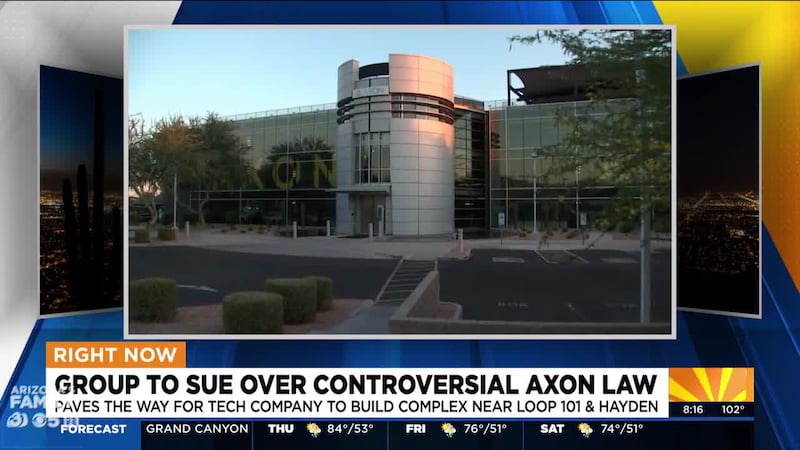
Scottsdale Residents’ Fight for Their Right to Vote
The controversy brewing in Scottsdale has captured widespread attention as residents mobilize against a new state law that strips them of the opportunity to vote on a major development project. The proposed headquarters of law enforcement technology company Axon is at the center of an escalating battle between local community values and state-level interference. This op-ed examines the tangled issues surrounding this case, the constitutional principles at stake, and the broader implications for local democracy.
At its heart, the dispute in Scottsdale is about the right of local residents to have a say in changes that affect their community. In this case, a law signed by Governor Katie Hobbs in April—known as Senate Bill 1543—removes the option for a public vote on a major project that includes Axon’s international headquarters, a luxury hotel, and roughly 1,900 apartments. This legislative move has drawn criticism from community advocates who believe that such decisions, with their potential impact on quality of life and neighborhood character, should be subject to voter referenda.
State-Level Legislation and Local Referenda Rights
This case shines a light on the tricky parts of balancing state legislation with local governance. In Arizona, the Constitution provides that residents have a right to refer issues to the ballot. However, proponents of the Axon-backed legislation argue that the law streamlines the process of development approvals and eliminates what they see as delays and unnecessary costs associated with public hearings.
Critics, however, claim that this approach ignores the small distinctions that make a difference in how local communities develop. When voters are denied the opportunity to weigh in on significant projects, trust erodes and citizen engagement suffers. The state law is seen as an example of special interest legislation that grants benefits to one specific company, undermining the general principle that all development decisions should be open to public debate.
Protecting Voter Representation
One of the key issues arising from this conflict is how best to ensure voter representation. Scottsdale’s situation has sparked passionate debate about whether local referenda are essential when it comes to zoning decisions. Here are some of the arguments put forward by residents and their legal advisors:
- Right to be Heard: Public participation in local government decisions ensures that all community members can weigh in on changes that may alter the character and future of their neighborhoods.
- Transparency in Governance: Allowing referenda helps in exposing the little details of why certain projects are approved, making it easier for the public to hold their elected officials accountable.
- Preventing Special Interest Legislation: Laws that cater to individual companies rather than the broader public interest could set a dangerous precedent and undermine public confidence in government institutions.
- Ensuring Local Control: When local residents have the chance to vote on important projects, it reinforces the idea that decisions affecting daily life should be made at the community level rather than by distant state officials.
Each of these points reflects a shared concern among many communities across the nation. The case in Scottsdale is not an isolated incident—it reflects an ongoing national debate about who gets to decide the future of urban development and at what cost public engagement is sidelined in favor of expediency.
Constitutional Challenges to Special Legislation
Legal experts have highlighted that the challenge mounted by Scottsdale residents goes beyond local politics; it strikes at the very foundation of constitutional democracy in Arizona. The lawsuit, spearheaded by the group Taxpayers Against Awful Apartment Zoning Exemptions (TAAAZE), contends that the new law violates two fundamental principles enshrined in the state constitution:
- The right of voters to hold referenda and decide on local legislation passed by elected councils.
- The prohibition against “special laws” that confer benefits on specific companies or groups, thereby disrupting the balance of equal treatment under the law.
Attorney Alexis Danneman of Perkins Coie emphasized that the law’s unique carve-out for the Axon project exemplifies a departure from equal treatment. This tailored legislation not only bypasses public debate but also introduces a selective method of development approval that could have far-reaching consequences if upheld in court.
Examining the Legal Framework
To understand the legal complexities of the case, it is helpful to break down the components of what makes this legislation so contentious:
| Aspect | Details | Implications |
|---|---|---|
| Legislative Action | State lawmakers passed Senate Bill 1543 to remove public referendum rights on developments in municipalities with between 200,000 and 500,000 residents. | Under such laws, large-scale projects may proceed without the checks and balances provided by public input. |
| Targeted Application | The Axon project—encompassing an international headquarters, hotel, and apartments—is specifically affected. | Critics argue this is a clear case of special interest legislation that favors a private entity at the expense of broader community concerns. |
| Constitutional Bar | The Arizona Constitution protects the right to refer matters to the ballot and bans laws that create special privileges. | If found unconstitutional, the law could compel future policy reforms to safeguard local democratic processes. |
This table illustrates how a seemingly routine zoning law can have tangled issues with fundamental legal principles. The charge is not just that the law limits voter participation but that it specially benefits one corporate interest, a situation that may upset the constitutional balance.
The Role of Lobbying in Shaping Policy Decisions
Another dimension of this debate is the influence of lobbying in the legislative process. Axon’s aggressive lobbying campaign, which culminated in a high-profile press conference outside the House of Representatives, is criticized by opponents who argue that such activities compromise the integrity of democratic decision-making.
Critics suggest that the company’s push for new development rules was not solely in the interest of efficient development but also a strategic move to avoid a potential public vote where they might face overwhelming opposition. The narrative put forward is that lobbying has allowed Axon to skirt the usual public debates that might otherwise serve as a check on development practices.
Understanding the Lobbying Process
The impact of lobbying on legislation is a topic rife with both enthusiasm and skepticism. Here are some key points that help frame the discussion:
- The Power of Money: Large corporations can fund intensive campaigns to sway lawmakers, creating a situation where financial influence trumps public sentiment.
- Direct Access to Lawmakers: Lobbyists often secure meetings with legislators, which can lead to the passage of bills that might bypass the usual public consultation procedures.
- Public Perception: When decisions appear to be made behind closed doors, it can fuel public distrust in government and lead to accusations that the process is rigged in favor of powerful interests.
- Policy Consequences: Policies shaped significantly by lobbying may neglect considerations crucial to local communities, potentially causing long-term harm to local democratic processes.
While it is undeniable that lobbying plays an essential role in modern democracy by providing lawmakers with industry-specific knowledge, the case in Scottsdale underscores the risks of allowing such influence to override local voter rights. The concern is that when a single corporation is able to steer policy in its favor, the broader interests of the community are sidelined.
Community Impact: Economic and Social Considerations
The proposed development by Axon is expected to have significant economic and social consequences for Scottsdale. On one hand, proponents argue that the project will create thousands of jobs and generate hundreds of millions in public revenue. They suggest that the new facilities and housing could revitalize areas close to the Loop 101 and Hayden Road, spurring further investments and economic growth.
On the other hand, critics are wary of the potential drawbacks, which include changes to community character, increased traffic congestion, and the possibility that large-scale developments may lead to a loss of local identity. The debate is characterized by the small twists of perspective between economic opportunity and community preservation.
Economic Pros and Cons of the Axon Project
The economic implications of the Axon project can be summarized as follows:
- Job Creation: The development may introduce myriad new employment opportunities, ranging from construction to retail and services once the project is completed.
- Revenue Generation: Increased business activity and new residents could result in a significant boost in tax revenues, providing the city with more resources for public services.
- Infrastructure Strain: Rapid growth can sometimes lead to overwhelmed public infrastructure, creating a need for expensive upgrades that might not immediately benefit current residents.
- Community Displacement: Large-scale developments have the potential to shift demographic balances, sometimes crowding out long-standing community members and altering the neighborhood’s social fabric.
These conflicting economic narratives illustrate the nerve-racking process of weighing progress against preservation. Taxpayers and local elected officials are forced to figure a path that can reconcile the benefits of development with the equally important right of citizens to have a say in their local future.
Legal Precedents and the Future of Zoning Laws
The lawsuit initiated by TAAAZE is not only a fight about a single zoning decision but also represents a broader challenge against what some view as overreach by state authorities. If the legal challenge succeeds, it could potentially set a precedent that protects local referenda from state-level encroachment. On the other hand, if the lawsuit falters, the decision may embolden similar tactics in other municipalities across the country.
Legal experts have pointed to several earlier cases where courts have wrestled with the balance between statewide legislative efficiency and local democratic rights. In many instances, the outcomes have hinged on the subtle details of the constitutional provisions related to public referenda and special legislation. The stakes in Scottsdale are high, and the decision could mark an important turning point for community control over development projects.
Lessons from Past Legal Battles
Examining historical cases can offer valuable insights into the challenges ahead. Here are some key lessons from previous legal fights related to zoning and local referenda:
- The Power of Public Opinion: In cases where citizens rallied together to defend their rights, the courts have sometimes sided with local interests, emphasizing the role of public consent in governance.
- Judicial Activism vs. Legislative Authority: Courts have occasionally been willing to push back against what they see as legislative attempts to circumvent the democratic process, stressing the need for balance between effective governance and public control.
- Impact on Future Legislation: Establishing a strong legal precedent that protects voter referenda can discourage states from passing laws that unduly favor special interests in the future.
Looking back at these lessons, it becomes clear that Scottsdale’s situation is emblematic of a larger struggle within American governance—a balancing act between enabling efficient development and safeguarding the democratic rights of local communities. The fine points of how laws are drafted and implemented carry implications that extend far beyond a single development project.
Community Voices and the Importance of Grassroots Activism
Amid the legal and political maneuvering, the grassroots campaign led by local activists has provided a powerful counterpoint to top-down legislative efforts. Backed by more than 25,000 signatures and linked to advocacy groups and labor unions, the challenge mounted by Scottsdale residents is a testament to how community organization can make a difference in public policy.
Bob Littlefield, a former Scottsdale councilman and the chair of TAAAZE, has been one of the most vocal critics of the state law. In his view, the legislation was pushed through not on the merits of public interest but because of fear that a public vote would result in the rejection of the Axon project. His pointed remarks underscore the tension between corporate influence and community autonomy.
Key Factors Driving Grassroots Movements
Grassroots activism is fueled by a range of factors that together create a compelling case for local participation in policy decisions:
- Community Solidarity: Residents often unite when they feel that a decision made by distant lawmakers does not reflect their needs or values.
- Transparency Demands: The call for open and accessible debate on zoning issues helps ensure accountability and maintains public trust.
- Resistance to Special Interests: When legislation appears to favor one company over community welfare, it galvanizes opposition groups who feel that their voices have been sidelined.
- Historical Experiences: Past experiences of rapid, unconsulted changes in their neighborhoods often motivate residents to insist on having a direct say in future developments.
These factors reveal not only why many Scottsdale residents are taking the matter to court but also underscore the importance of maintaining robust local democratic processes. The law should serve the public interest, not the interests of powerful corporate entities.
Balancing Economic Development with Democratic Participation
Behind the legal technicalities and passionate debates lies a more profound question: How can communities balance the pressing need for economic growth with the equally important requirement for democratic participation? On one level, large-scale projects like Axon’s headquarters promise financial benefits and opportunities for employment. On another level, they risk sidelining the voices of the very people who will be most impacted by these changes.
This constitutional conundrum is riddled with problematic choices that test the values of a democratic society. Supporters of the development argue that a streamlined process can remove off-putting delays and encourage timely investments. Critics, however, warn that without the input of local residents, the development could lead to unintended consequences, such as community displacement and environmental degradation.
Considerations for a Balanced Approach
Here are some small distinctions and key measures that could help strike a balance between rapid development and fair public participation:
- Enhanced Public Consultation: Even if development timelines are compressed, structured opportunities for public input should be maintained to ensure transparency.
- Independent Oversight: Establishing independent panels to review and approve large-scale projects could add an extra layer of accountability to the process.
- Incremental Approaches: Instead of singular, sweeping legislative changes, authorities might consider phased reforms that allow time for community feedback and policy adjustments.
- Community Benefit Agreements: Negotiating agreements that specifically earmark benefits for local residents—such as affordable housing, improved infrastructure, or community programs—can help align the project with public interests.
These measures represent practical ways to manage the twists and turns of urban development while ensuring that economic progress does not come at the expense of local democracy. They remind us that policy solutions should not be one-size-fits-all but adapted to the unique needs and circumstances of each community.
Addressing Concerns of Special Interest Legislation
One of the most contentious aspects of the new law is its apparent role as a special treatment for Axon. Critics argue that the law is more than a mere streamlining of zoning procedures—it is a tailored legislative tool designed specifically to favor one entity over the broader public interest. Such special interest legislation is seen as a threat to the equitable application of laws in Arizona.
The legal challenge, therefore, is aimed at exposing and dismantling these tailored rules. Attorneys like Alexis Danneman argue that the Axon bill violates not only the spirit but also the letter of the state constitution, which calls for uniform treatment of all zoning requests and prioritizes the right of public referenda. In this way, the lawsuit is much more than a local skirmish; it is a fight to uphold a principle that is central to democratic governance.
Implications for Future Legislation
If the courts rule in favor of Scottsdale residents, the decision could have a ripple effect on future legislation. Here are some potential implications:
- Precedent for Voter Sovereignty: A favorable ruling would reinforce the idea that local residents must be given the right to vote on significant changes to their community, thereby setting a strong precedent for future disputes.
- Reevaluation of Special Legislation: Lawmakers may have to reconsider and possibly overhaul laws that appear to target specific companies or interests, ensuring that all legislation complies with constitutional standards.
- Increased Accountability: Judicial affirmation of voter rights in such cases could lead to increased oversight and more rigorous debates around local zoning and planning decisions in state legislatures.
Ultimately, the outcome of this legal challenge serves as a bellwether for how similar cases may be handled in the future. It underscores that any legislative attempt to bypass democratic accountability is likely to be met with robust legal scrutiny.
Weighing the Perspectives: A Neutral Analysis
In examining the Scottsdale case, it is important to recognize that both sides in the debate have compelling arguments rooted in concerns for community welfare. On one side are proponents of streamlined development, arguing that reducing bureaucratic delays is critical for economic progress. On the other side are staunch defenders of public participation, who believe that democracy demands that every significant decision be subject to voter input.
The debate features several practical points:
- Efficiency vs. Inclusion: While rapid decision-making can be appealing for economic reasons, it may jeopardize the inclusive nature of local governance.
- Corporate Interests vs. Community Rights: The special carve-out for Axon is particularly worrisome for those who fear that corporate power is overshadowing the rights of everyday citizens.
- Long-Term Impact vs. Short-Term Gains: Formulating policies that look beyond immediate economic incentives is essential to ensure sustainable community development.
The reality is that there are no easy answers when it comes to balancing these competing priorities. Each side’s arguments is full of problems and challenges. What remains indisputable is that the outcome of this case will set a tone for future legislative decisions in Arizona and potentially across the nation.
Looking Ahead: The Future of Democratic Governance in Zoning Laws
As Scottsdale residents take their fight to court, the broader implications of this case are beginning to crystallize. The legal, economic, and social dimensions all point to a critical need for greater accountability and transparency in the way zoning decisions are made. The public debate over the Axon project is not merely about one company or one development—it is indicative of larger shifts in how democratic processes are being both challenged and re-envisioned in times of rapid urban growth.
For many, the hope is that the legal challenge may open the door to reforms that safeguard the small twists of community engagement. The Senate Bill 1543 serves as a focal point in discussions about whether the balance has tipped too far in favor of unchecked development. The case raises inevitable questions: How much power should local communities wield? Is it acceptable for state laws to override locally decided referenda, even when those laws promise efficiency? And where do we draw the line between progress and the preservation of democratic rights?
Potential Paths Forward
In contemplating these issues, several key questions and potential courses of action emerge:
- Revisiting Legislative Processes: Lawmakers could consider accepting incremental reforms that allow for public input while still facilitating economic development.
- Building Consensus: Greater collaboration between local officials and state legislators may help in crafting policies that are both efficient and democratic.
- Enhanced Civic Engagement: Local communities should be encouraged to participate actively in the decision-making process, ensuring that their voices are heard at every stage of policy formulation.
- Judicial Review: Ongoing legal challenges, such as the one in Scottsdale, remind us of the importance of the judiciary in maintaining the fine points of constitutional governance.
Ultimately, the resolution of this case will likely influence how similar disputes are handled in the future. It has the potential to redefine what is acceptable in terms of special interest legislation and to reinvigorate community efforts to protect their rights. That said, achieving a balance between streamlined decision-making and full democratic participation will continue to be a nerve-racking, yet essential, task for policymakers across the country.
Conclusion: Charting a Course Through Tangled Legal and Democratic Issues
The controversy over the Axon headquarters in Scottsdale encapsulates the twists and turns that local communities face when state legislation appears to override democratic processes. While the promise of economic rejuvenation and job creation is certainly appealing, it cannot come at the expense of the public’s right to participate in decisions that profoundly affect their everyday lives.
This case serves as a timely reminder that law and government must work hand in hand with community voices to ensure that progress does not undermine the foundational principles of democracy. The legal battle ahead is not just a fight over zoning laws—it is a test of the delicate balance between development and democratic participation, efficiency and transparency, corporate influence, and grassroots activism.
As Scottsdale’s residents prepare to challenge Senate Bill 1543 in court, the outcome will serve as a critical juncture for future policymaking. It is a moment to reflect on whether state interventions are truly in the public interest or if they primarily serve powerful corporate entities. With every legal argument, public protest, and policy proposal, we are reminded that the health of our democracy is interwoven with the ability of local communities to shape their own destiny.
In the end, the challenge facing Scottsdale is one of finding a sustainable path through the tangled issues of land use, corporate influence, and democratic rights. It is a challenge that requires all stakeholders—lawmakers, citizens, and legal experts alike—to work together and steer through the complicated pieces of modern governance. Whether the upcoming court decision tilts the balance toward more robust local control or upholds the state’s authority remains to be seen, but one thing is clear: safeguarding the right to voted decisions is essential for a future in which our communities remain resilient, inclusive, and truly democratic.
By keeping the debate open and ensuring that every voice is heard, we can create a framework where economic development and public participation are not mutually exclusive but are mutually reinforcing. As we take a closer look at this case, it serves as a call to action—to not let streamlined processes become excuses for special treatment and to always remember that democracy thrives best when every community member has a say in its evolution.
In summary, the legal and political saga in Scottsdale is a critical moment for our society. It encapsulates how policy decisions are influenced by both public input and private interests, and it challenges us to find smarter, fairer ways to integrate the competing demands of progress and democratic accountability.
Ultimately, the outcome of this case may well determine the future direction of zoning laws and referenda rights not only in Arizona but also in other states grappling with similar issues. Only time will tell if the courts will uphold the community’s right to vote, thereby setting a precedent that champions the cause of local democracy, or if the legislative model of expedited development will continue to shape urban landscapes across the nation.
Originally Post From https://azmirror.com/briefs/scottsdale-residents-set-to-sue-over-a-new-state-law-that-blocks-a-vote-on-axon-headquarters/
Read more about this topic at
DEMOCRACY UNDER SIEGE
Democracy Under Siege (2025)


No comments:
Post a Comment