


Scottsdale’s Legal Crossroads: Weighing the Costs and Benefits of a State Lawsuit
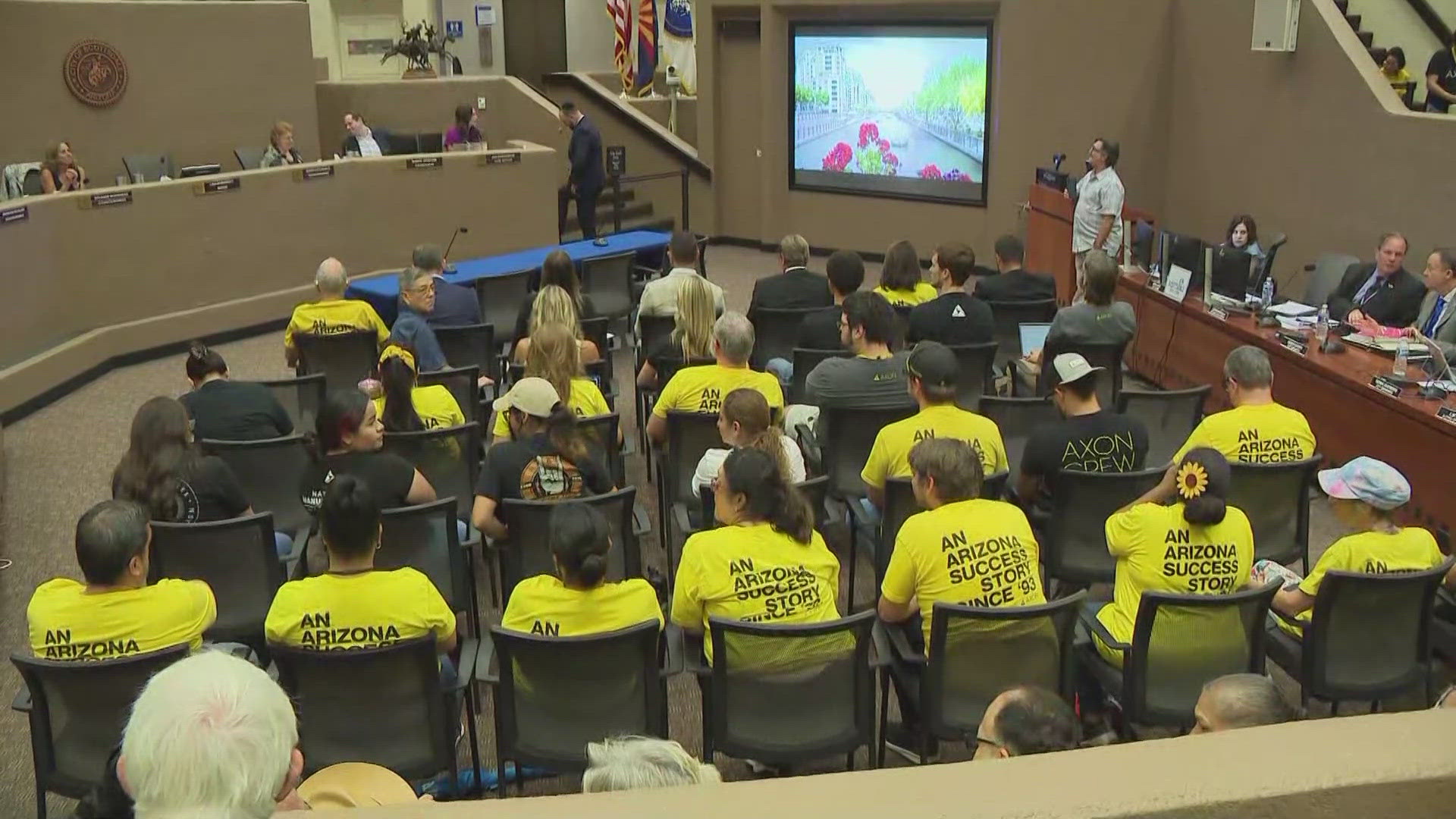
The recent decision by the Scottsdale City Council to table a vote on suing Arizona over Senate Bill 1543—commonly known as the “Axon Bill”—has sparked an intense debate in our community. What started as a debate over a local expansion plan has evolved into a larger discussion about citizens’ rights, state power, and economic growth. In this editorial, we explore the twists and turns of the current situation, examine the potential legal consequences, and assess how the decision affects our city’s future.
Understanding the State Law and the Citizen Referendum
At its heart, the issue revolves around a new state law that eliminates the ability of Scottsdale residents to call for a citizen-led referendum regarding Axon’s planned headquarters expansion. This means that instead of letting residents weigh in on what may be a major change for the city, the decision is largely streamlined in favor of the company. Many feel that this law undermines the voice of the community, while others contend that the economic arguments for Axon’s expansion outweigh the residents’ rights to vote.
Critics argue that by blocking the referendum, the legislation erases an essential part of local democracy. They see it as a forbidden path that not only threatens individual rights but might also set a worrying precedent for other municipal decisions in the future. Supporters, however, point out that allowing the company to bypass direct citizen input might lead to economic opportunities that would otherwise be delayed by lengthy public debates.
This legal fight is layered with tangled issues. While on one side there is the economic boost and tax revenue aimed to generate thousands of jobs and millions in tax contributions, on the other, there is the need for citizens to have a say in transformations that affect their everyday lives. The balancing of these interests is proving to be an intimidating challenge for city officials.
Examining the Essential Debate: Legal Rights Versus Economic Growth
A core question arises: Should the government prioritize economic development or protect the guaranteed rights of its citizens? On one hand, the influx of 5,500 jobs and the promise of substantial tax revenues provides a super important financial incentive for the entire region. On the other hand, sidelining citizen input in such decisions touches on the nerve-racking principles of democracy.
Supporters of the lawsuit argue that the decision to closely defend citizens’ rights is super important to a functioning democracy. They fear that if local voices are ignored today, it might lead to further erosion of civic participation in the future. These residents believe that every individual should have a chance to have a say in important municipal decisions. Here are the key points being debated:
- Protection of local governance and the citizen referendum process.
- Ensuring that large corporations abide by community rules and values.
- The balance between stimulating economic growth and upholding democratic rights.
- The potential financial risks the city might face if a lawsuit is pursued.
Economic Implications: The Promise and the Price Tag
The backdrop to this discussion is not just a legal philosophical debate but also a matter of practical economics. The proposed expansion of Axon’s headquarters holds the potential for significant fiscal benefits for Scottsdale—a prospect that has drawn both political stars and business leaders into the fold. With projections indicating billions in expanded economic activity, one can argue that rejecting such growth might leave the city short changed in a competitive market.
However, as the conversation unfolds, there is an increasing awareness of the intimidating financial risks involved with engaging in a lawsuit against the state. One argument raised by an Axon spokesperson mentioned that the city could end up spending approximately $3 million on what is seen as an off-putting, potentially unwinnable legal battle. The warning from some council members is clear: even if citizens’ rights are at stake, the financial consequences of initiating a state lawsuit must be carefully weighed.
Below is a table outlining some of the projected economic pros and cons inherent in this debate:
| Proponents' Perspective | Opponents' Concerns |
|---|---|
| Creation of 5,500 high-value jobs | Risk of $3 million+ in legal expenses |
| Millions in annual tax revenue for the city | Potential long-term financial strain from protracted litigation |
| Boost to urban development and housing projects | Negative public sentiment if city appears to be siding with corporate interests |
| Enhanced economic status for Scottsdale on a state level | Uncertainty over the long-term economic impact of overturning state law |
This table highlights that while the practical benefits are tempting, the hidden complexities of mounting a lawsuit remain a significant sticking point. It is a classic instance where what seems like a win-win on paper may unravel into a series of nerve-racking questions about municipal responsibility and fiscal prudence.
The Political Landscape and Public Sentiment
Political leaders in Scottsdale are now tense as they try to figure a path between the competing interests of economic development and preserving local democratic rights. The current decision to postpone the vote on pursuing a lawsuit reflects a moment of careful consideration among city officials. Some leaders are advocating for a more measured approach, arguing that immediate legal recourse may not only prove financially expensive but also politically damaging.
Residents have their own mixed feelings. Activists and those who feel that the law shortchanges the public’s right to have a say in these decisions are vocal about their anger. Meanwhile, others, including business advocates and some policymakers, stress that economic development cannot be put on hold simply due to fears of upsetting the status quo.
Several community members have taken clear positions:
- Advocates for Citizen Rights: These citizens believe that canceling the referendum diminishes participatory democracy. Their call is for the municipality to stand with the people and challenge any law that strips away local control.
- Economic Growth Supporters: This group is optimistic that even if the referendum is blocked, the economic benefits will eventually trickle down, creating a better standard of living for all involved.
- Pragmatic Observers: Many are simply trying to make sense of a policy that appears full of problems, uncertain about which path will benefit the community in the long run.
Public Pressure and the Role of Local Media
Public opinion and media coverage have amplified the voices on both sides of this debate. Local news channels have played a key role in highlighting both the potential financial boom and the risks associated with bypassing the democratic process. With heated interviews and on-the-ground reporting, media outlets like FOX 10 have provided a stage for spirited discussion among residents, legal experts, and political leaders.
This situation illustrates the power of local journalism in shaping the narrative around such contentious issues. By keeping citizens updated and informed, the media helps to ensure that accountability remains a priority. It also provides a crucial service—translating complicated state laws into the everyday language of community members, thereby making the twisted topics of legal battles accessible to everyone.
Assessing the Potential Legal Strategies
The decision to postpone a vote on the lawsuit clearly indicates that Scottsdale’s legal advisors find the potential battle with the state to be loaded with issues. The legal community is split on the subject. Some believe that challenging the state law represents a bold stand for democratic rights, while others see it as a risky gamble that might lead to more questions than answers.
When evaluating the options available to municipal leaders, several legal strategies come to the fore:
- Direct Litigation Against State Law: This strategy focuses on challenging the constitutionality of the state policy that blocks referenda. It might set a strong precedent but also exposes the city to high legal costs and the risk of defeat.
- Negotiated Settlement: An alternative approach could involve negotiating with state officials to carve out exceptions or modifications to the law that would allow for some form of public participation. Though less confrontational, this option may result in compromises that leave both sides unsatisfied.
- Incremental Legal Reforms: Instead of launching a full-blown lawsuit, Scottsdale might consider working through legislative channels to gradually introduce reforms that secure referendum rights over time. This approach is less immediate but could prove more sustainable in the long run.
Each option carries its own set of intimidating risks and potential rewards. The challenge for city leaders is to figure a path through these options while remaining accountable to both the law and their constituents. It is a classic case of balancing the must-have need for public input with the often-complicated, nerve-racking realities of legal reform.
Understanding the Hidden Complexities of Municipal Legal Battles
The legal issues at hand are strewn with confusing bits and subtle details that can easily be overlooked. For example, what does it really mean for citizens when their referendum rights are curtailed by state law? Do the short-term economic benefits justify the long-term loss of democratic participation? These are questions that legal experts and community members alike are struggling with.
Looking into the fine points of the situation, one finds that what appears to be a simple yes-or-no decision is in fact a labyrinth of legal principles. Legal experts caution that the case is riddled with tension and that a poorly timed lawsuit could have ramifications beyond the immediate issue. For instance, it could influence future legislative measures, affect municipal elections, or alter the judicial interpretation of citizen-referendum rights across the state.
The following bullet list breaks down some of the hidden complexities:
- Determining the appropriate legal standards for evaluating state laws that limit local decision-making power.
- The potential domino effect on other cities in Arizona if Scottsdale prevails in a legal challenge.
- The interplay between state-level economic policy and grassroots democratic principles.
- The risk of setting a precedent that encourages similar laws in other jurisdictions, possibly eroding local autonomy further.
It remains to be seen whether the postponed vote will turn into a renewed push for legal action or if further negotiations and legislative efforts will take precedence as the city continues to steer through these competing priorities.
Risk Analysis: Weighing the Pros and Cons of a Municipal Lawsuit
Deciding whether to initiate a lawsuit against the state is not a decision to be taken lightly. There are several nerve-racking factors that city leaders must consider. Even if a legal challenge is rooted in a noble fight for democratic rights, the tangible costs—both economic and political—could be overwhelming if the case does not proceed as expected.
A detailed risk analysis needs to cover both direct and indirect consequences. On the one hand, a successful lawsuit could reaffirm citizens’ rights and set an encouraging precedent for participation in local decisions. On the other hand, failure in court might result in significant financial strain and a loss of public trust.
Below is a structured list of the risks associated with a municipal lawsuit:
- Financial Risk: The projected legal fees could strain the city’s budget, potentially diverting funds from essential services.
- Public Trust: If the lawsuit fails, it could be seen as the city siding with corporate interests over citizen rights, eroding trust in elected officials.
- Precedent Setting: A loss might empower state legislators to introduce similar laws elsewhere, further weakening local governance.
- Political Fallout: Internal divisions within the city council and among residents could lead to a fragmented political landscape, complicating future initiatives.
- Legal Uncertainty: Given the off-putting complexity of state legal frameworks, there is no guarantee that a lawsuit would result in a favorable outcome.
This risk analysis emphasizes that even a well-intentioned fight for democratic rights is not without its complicated pieces. Decision-makers must carefully think through every twist and turn before committing to the legal path.
Historical and Comparative Perspectives: How Other Cities Have Fared
Looking at similar challenges in other parts of the country can help illuminate possible outcomes for Scottsdale. Municipalities that have once faced similar legal dilemmas provide useful lessons. In some cities, aggressive legal challenges have led to reform and enhanced citizen participation. In others, lawsuits have resulted in costly settlements and a prolonged legal battle that compromised other civic projects.
For instance, a few cities that attempted to overturn state legislation that restricted local referenda found themselves entangled in tangled legal disputes that forced them to reallocate funds away from community development. These cases serve as cautionary tales for Scottsdale.
In contrast, some jurisdictions have managed to negotiate nuanced reforms without resorting to litigation. By finding their way through the maze of legal challenges, they managed to safeguard public input without endangering civic finances. These examples illustrate that perhaps a more pragmatic and modest legal approach may not only be more sustainable but might also be less intimidating in the long run.
Below is a comparison of two hypothetical approaches seen in different cities:
| Approach | Pros | Cons |
|---|---|---|
| Aggressive Litigation |
|
|
| Incremental Legislative Reform |
|
|
This comparative analysis underlines the fact that no approach is without its problematic twists and turns. The choice between a combative legal strategy and a more measured legislative process reflects broader debates about how best to secure both economic advancement and democratic participation.
Assessing the Municipal Decision: A Balancing Act
Scottsdale’s postponement of the lawsuit vote is a reflection of the tangled, nerve-racking nature of municipal decision-making in politically charged environments. On one side, there is pressure from citizens and activist groups to defend referendum rights at all costs; on the other side, city officials face the very real possibility that an aggressive legal fight may drain resources and jeopardize future projects.
The city council’s decision to table the vote is a tactical pause—a moment to weigh both the immediate and long-term effects of any legal challenge. Mayor Lisa Borowsky’s commitment to delaying the vote while calling the situation “unfinished” suggests that the matter remains highly charged. For some residents like Bob Littlefield, this pause is seen as a signal that the council is aligning itself with corporate positions at the expense of local citizen rights.
Critics argue that any hint of uncertainty in such decisions undermines public trust. They warn that without a decisive stance, the city might end up caught between conflicting pressures, ultimately failing to satisfy either side. Indeed, residents are already vocal about needing clarity, with some insisting that the vote should have been a unanimous decision in favor of protecting referendum rights.
City officials, meanwhile, are attempting to steer through this maze of public opinion and fiscal responsibility. They have been careful to emphasize that the postponement is not a permanent withdrawal from the debate but instead a strategic pause to address all the nerve-wracking financial and legal risks involved.
The Role of Civic Engagement in Shaping Policy
Civic engagement is fundamental in guiding policy decisions, especially under circumstances as challenging and full of problems as the current scenario. The debate over the Axon expansion is more than just a conflict between local authorities and state law—it represents a clash between two visions of governance.
On one hand, there is the modern, corporate-driven model that emphasizes economic growth and streamlined decision-making. On the other, there’s the grassroots, citizen-focused approach that prioritizes public input and the nuanced, small distinctions that define local democracy. When these two worlds collide, the result can be a tense, on-edge political environment where every decision is fraught with potential backlash.
Residents who support the referendum emphasize the importance of having their voices heard in decisions that shape the future of their neighborhoods. They argue that even if Axon’s expansion does indeed promise significant economic returns, the right to participate in that process is a super important building block of the community’s identity. These citizens often ask:
- What is the true cost of sidelining public opinion?
- How will long-term civic trust be affected if citizens feel overpowered by state decisions?
- Can economic development be pursued without sacrificing the little details of democratic representation?
For many, civic engagement is not just a matter of policy—it is a reaffirmation of their right to shape the environment in which they live. The ongoing debate is a reminder that while economic indicators and tax revenues are super important numbers, they do not fully capture the essence of what it means to live in a vibrant, participatory community.
Looking Ahead: The Future of Municipal Legal Strategies
As Scottsdale prepares for what is sure to be a long-winded and nerve-racking debate, city leaders must consider the broader implications of their next steps. Will a renewed push for legal action eventually galvanize residents around a shared cause? Or will softer, incremental reforms prove to be a more sustainable solution, one that avoids the off-putting potential fallout of a contentious court battle?
The pending decision is not merely a local issue but an important precedent for how municipalities across the state might respond to similar challenges. In essence, it is a test of how well a local government can uphold democratic values while navigating the tricky parts of economic development and state-imposed limitations.
City officials will need to weigh several super important questions as they plan their next move:
- How can the city ensure that public sentiment is integrated into the decision-making process?
- What steps must be taken to mitigate the potential financial losses from a protracted legal fight?
- Can a balanced approach be found that both respects citizen participation and leverages the economic benefits on offer?
- How might a legal strategy be built to withstand the off-putting complexity of state judicial processes?
These considerations form the crux of a balancing act that many may view as both critical and complicated. The actions taken in Scottsdale could very well lead the way for future reforms in how citizen referenda are handled in the broader state context.
Engaging with the Broader Legal Terrain
It is essential not just to focus narrowly on the Axon expansion, but also to take a closer look at the larger legal terrain that encompasses similar challenges. In legal landscapes around the country, we see a pattern where local governments are often caught between economic ambitions and democratic responsibilities. By comparing Scottsdale’s approach with that of other municipalities, leaders can dig into the fine points of what legal strategies work best under similar circumstances.
Legal experts suggest that working through established networks of municipal government can lead to more robust outcomes. These might include collaborations with other cities facing similar problems or even forming coalitions that push for reforms at the state level. Such collective action can help reduce the individual risks that come with any single lawsuit and spread the financial burden over multiple jurisdictions.
For example, some localities have utilized inter-municipal agreements to address similar issues, pooling resources to fund legal defenses or to lobby for legislative corrections. The following bullet list summarizes a few successful strategies seen elsewhere:
- Lobbying for legislative amendments that restore referendum rights
- Forming coalitions with other cities to share legal costs and resources
- Engaging legal scholars to craft more nuanced legal arguments that bridge municipal needs with state mandates
- Using pilot programs to test alternative models of citizen engagement in large-scale development projects
These approaches are not without their own challenges, but they showcase that there are multiple pathways to addressing complicated legal and political dilemmas.
The Human Element: Voices from the Community
Amid the legal jargon, detailed economic forecasts, and political posturing, it is crucial to remember that real people are at the center of this debate. Everyday residents of Scottsdale have clear opinions on what the best course of action should be. For some, the idea of a lawsuit is nerve-racking—a step that might lead to further polarization and financial strain. For others, it is a necessary defense of their fundamental right to participate in decisions that affect their lives.
Residents like Bob Littlefield, who have organized and rallied for the referendum, represent the passionate, grassroots response that many believe is essential for vibrant democracy. His concerns echo a broader call for accountability and transparency in local governance. When citizens express that “they’re afraid of Axon,” it is not merely a critique of a corporate entity; rather, it is a cry for a balanced process where power is not concentrated in the hands of a few.
This human element is perhaps the most important aspect of this entire debate. The struggles, the hopeful aspirations for economic opportunity, and the frustrations over lost local agency are all part of the narrative that defines Scottsdale’s future. In a democratic society, it is these voices that matter most—voices that demand both super important accountability and practical, tangible benefits.
Community Forums and Public Involvement
Ensuring that the community is involved in every step of this process is a key super important element of the path forward. Local town hall meetings, public forums, and digital platforms like social media have all become arenas where ideas and opinions are fiercely exchanged. Such public involvement can help municipal leaders to get around the most tangled issues by finding common ground between competing interests.
Moreover, these avenues of engagement allow both citizens and officials to communicate effectively, discussing everything from the little details of proposed legal reforms to the broader economic strategies at stake. For a community deeply invested in the outcome, structured debates and public consultations are more than just procedural steps—they are the dye that colors the future of civic progress.
As this discussion continues, it is super important that attention is given not only to the legal and economic ramifications but also to these subtle details of human engagement that shape policy in profound ways. The success of any legal strategy will ultimately depend on the strength of the relationship between representatives and the people they serve.
Conclusion: Charting a Course Through Legal and Political Uncertainty
The Scottsdale City Council’s decision to table the vote on a lawsuit against the state represents a critical juncture. It is a moment filled with intricate legal pieces, overwhelming economic promise, and the undeniable human element that defines civic life. While the postponement of the decision is a temporary respite, it opens up a space for careful, detailed consideration of what is truly best for the community.
The road ahead is undoubtedly full of confusing bits and tricky parts. City officials must figure a path that allows them to embrace economic opportunities without sacrificing the essential rights of local citizens. This balancing act is not simply a matter of choosing between two opposing paths—it is about forging a compromise that respects both the need for economic development and the super important democratic foundations upon which Scottsdale is built.
There are several key takeaways for community members and policymakers alike:
- Transparent Decision-Making: It is crucial that every step of this process, especially amidst the swirling tension and stateside legal challenges, be carried out openly with plenty of public input.
- Collaborative Solutions: Both legal experts and local officials should consider collaborative avenues that involve other municipalities or coalitions to share the burden of legal costs and refine strategies that work.
- Long-Term Vision: While immediate economic gains are attractive, long-term democratic health is built on a continuous, engaged dialogue between citizens and their government.
- Balanced Approach: A gradual, incremental reform strategy may well be less intimidating than a full-blown lawsuit, reducing the risk of financial fallout while still making a strong stand for local participation.
As Scottsdale continues to work through these challenging decisions, the story remains unfinished. The postponed vote is not an end but rather a pause—a moment to get into the little details and plan a more sustainable, inclusive approach to growth and governance. Whether through direct litigation or incremental legislative reforms, the goal must remain clear: preserving the delicate balance between robust economic progress and the essential right of communities to have a voice in shaping their future.
Ultimately, the outcome of this debate will have far-reaching consequences. It will set the stage not only for the future of Axon’s expansion but also for the manner in which local governance defends democracy against policies that may feel overwhelming and off-putting. Scottsdale’s leaders and citizens alike must work together, finding common ground in this maze of legal challenges, economic opportunities, and civic rights.
While the decision to postpone the lawsuit vote might be seen by some as a retreat, it can also be interpreted as a strategic step toward a more considered resolution. In the face of intimidating legal battles and financial uncertainties, this pause allows us to examine every twist and turn with care. It gives time for more voices to be heard and for all stakeholders to contribute to a future where both economic vitality and vibrant democracy reinforce one another.
As we watch this story unfold, one fact remains indisputable: the future of Scottsdale will be shaped by how well we, as a community, can blend pragmatic economic initiatives with the super important need for transparent and participatory decision-making. The coming months will require even greater community engagement, detailed legal analyses, and grassroots activism to ensure that every decision taken is reflective of our collective aspirations as residents.
For those who see this controversy as simply a battle over one company’s headquarters, it is worth remembering that at its core, this is a fight about the kind of community we want to create—one that acknowledges the little details, addresses the confusing bits, and recognizes the inherently human need to be a part of decisions that determine our shared destiny. In this ongoing narrative, every resident’s voice matters, and every legal or economic strategy must be evaluated not just for its immediate gains but for its broader contribution to our democratic ideals.
In conclusion, while the decision to postpone the vote on the Axon lawsuit is fraught with challenges and short-term frustrations, it also offers a rare opportunity to take a closer look at the fine points of municipal governance. It challenges us to take a balanced, nuanced approach that respects both the pursuit of economic prosperity and the super important democratic rights of every citizen in Scottsdale. The path forward may be riddled with tension and loaded with issues, but it is also filled with potential for a more thoughtful, inclusive future that every member of our community can be proud of.
Originally Post From https://www.fox10phoenix.com/news/scottsdale-leaders-defer-decision-suing-state-over-axon-expansion
Read more about this topic at
Deferred Judgment | Rifle, CO - Official Website
Deferred Judgment | Student Legal Services


No comments:
Post a Comment