


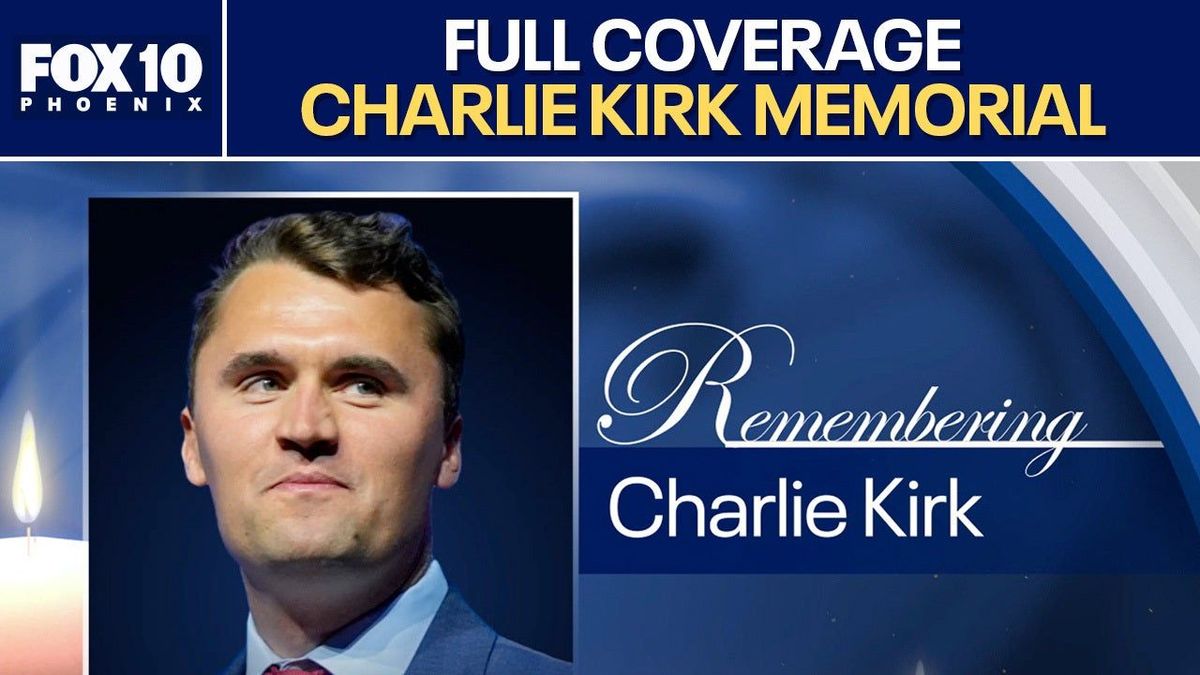
Charlie Kirk’s Memorial Service: A Legal Perspective on Public Safety and Free Speech
The memorial service for Charlie Kirk, a polarizing yet undoubtedly influential conservative activist, has rapidly transformed from a simple gathering into a significant legal and public safety event. In the days following his tragic assassination, this ceremony has taken on added layers of legal, security, and constitutional significance. As legal professionals and concerned citizens, it is important to consider the various legal aspects that intersect at such large-scale memorials. This opinion editorial takes a closer look at the event, with special attention paid to the interplay between public safety measures, freedom of expression, and the unique legal challenges that come with managing tense, crowded settings.
Examining the Legal Framework Behind Large Public Assemblies
Memorial events of this magnitude are not just emotional gatherings; they are also full of problems for law enforcement agencies, event organizers, and government officials who must figure a path through a maze of legal responsibilities. The legal framework surrounding such events is full of tricky parts and complicated pieces that demand careful analysis—especially when hundreds of thousands of individuals might be in attendance.
Public gatherings in the United States are protected under the First Amendment, which guarantees freedom of speech and peaceful assembly. However, this right is counterbalanced by legal requirements designed to ensure public safety and maintain order. In this case, the memorial service for Charlie Kirk is not only a venue for honoring a fallen public figure but also a complex situation loaded with issues related to security, crowd control, and civil liberties.
Event organizers, such as those for the memorial at State Farm Stadium in Glendale, Arizona, must work through many tangled issues to create an environment where people can exercise their constitutional rights without compromising safety. The legal implications of such events have been further complicated by the tragic circumstances surrounding Kirk’s death. Planning and implementing security protocols, for instance, are more critical than ever and come with their own set of legal challenges.
Security Challenges and Legal Implications in the Memorial Setting
One of the most pressing legal challenges in hosting a memorial of this scale is ensuring the safety of all attendees. The experience of managing large public events is full of twists and turns, especially when dealing with potentially intimidating public reactions and unpredictable outcomes.
Pre-Event Legal Preparations for Crowd Security
In preparing for the memorial service, law enforcement agencies and private security must consider several legal factors:
- First Amendment Rights: Ensuring that security protocols do not infringe on attendees’ rights to free speech and peaceful assembly.
- Use of Surveillance and Monitoring: Balancing the need for public safety with privacy concerns, particularly regarding video surveillance and data collection during the event.
- Public Safety Orders: The imposition of restrictions, such as the no-bag policy and flight restrictions, must comply with local and federal laws while still addressing significant security concerns.
- Access Control Measures: Ensuring that entry points and crowd distribution adhere to legal standards, minimizing risks associated with overcrowding and chaos.
Each of these bullet points represents a legal consideration that might seem intimidating for event planners. Yet, by understanding and addressing these issues, authorities can help to create a secure environment that respects both the letter and the spirit of the law.
State Farm Stadium as a Case Study in Managing Legal Risks
State Farm Stadium’s management of the event offers an interesting case study on how to work through legal hurdles while hosting a major public event. The stadium, with its official policies now at the forefront of public attention, is adapting to a new chapter in its operational history. Historically, stadiums have handled routine sports events; however, the memorial forms a new and nerve-racking scenario for administrators.
Event guidelines, such as the enforcement of a strict no-bag rule, illustrate the balance between practicality and legal compliance. Officials claim that the enforcement of a no-bag policy is critical for ensuring rapid security screenings and preventing contraband entry. Yet this policy must be communicated and applied consistently to avoid any claims of discrimination or arbitrary enforcement. A table that summarizes some of the key security measures is provided below:
| Security Measure | Description | Legal Consideration |
|---|---|---|
| No-Bag Policy | All bags are banned inside the venue to ease screening processes. | Must be non-discriminatory and clearly communicated to all attendees. |
| Flight Restrictions | No overflights allowed within the designated airspace. | Adheres to FAA regulations; violation could lead to serious legal repercussions. |
| Controlled Entry Points | Multiple entry gates are managed to control crowd distribution. | Ensures emergency access and adherence to local public safety laws. |
| Surveillance | Deployment of video surveillance to monitor crowd behavior. | Must consider privacy rights and data protection laws while ensuring public safety. |
This approach allows event organizers to systematically figure a path through various legal requirements, ensuring that public safety is managed in a way that does not infringe upon individual rights.
Balancing Free Speech with Public Safety: A Constitutional Challenge
The memorial service is a space where political expression and free speech come to the forefront—a setting where legal principles and constitutional rights intersect. It is essential to recognize that events of this magnitude, while symbolic, carry significant legal weight. The service serves as a platform for various high-ranking officials and speakers, including former government leaders, conservative commentators, and activists. Each of these speakers contributes to the vibrant tapestry of political discourse, underpinned by the belief in free expression.
Ensuring the Right to Physical Assembly
The right to assemble peacefully has long been a cornerstone of American democracy. However, when an assembly attracts a crowd that could potentially exceed 100,000 people, the risks become more than just symbolic—they become legal liabilities. The intertwining of legal and constitutional obligations creates a framework in which every facet of the event is riddled with tension, as security measures and free speech protections must find common ground.
Historically, the courts have been called upon to determine where one right may impinge upon another. In this context, the key legal dilemma is ensuring that public safety measures do not unduly infringe on the right to protest or memorialize a public figure. For example, restrictions such as limited parking, no overnight parking, and controlled entry areas are necessary for crowd management. Yet, if applied too stringently, they risk curtailing the free movement and expressive rights of attendees.
It is important to balance these matters by ensuring that any restrictions are strictly necessary and proportionate. For attendees and legal experts alike, the conditions imposed should be seen as practical measures rather than attempts at suppression. The challenge remains to find your way through these fine details without compromising the constitutional freedoms that are meant to protect such expressions.
The Role of Law Enforcement in Protecting Constitutional Freedoms
Law enforcement officers are at the crossroads of public safety and constitutional duty. For them, the task of managing a large-scale public event is full of confusing bits and subtle parts. Officers must not only focus on preventing disruptions or ensuring that the memorial proceeds without violent incidents, but they must also guarantee that any actions taken are within the boundaries prescribed by law.
For instance, monitoring crowd behavior is essential for preempting violent confrontations. However, such monitoring must be done by following guidelines that forbid racial profiling, misuse of surveillance, or unwarranted use of force. These little twists in the management of public events can often lead to legal challenges and lawsuits if not handled carefully.
To assist in the understanding of these legal obligations, consider the following list highlighting some key principles on which law enforcement should base their actions:
- Respect for the constitutional right to free speech and peaceful assembly.
- Adherence to existing local, state, and federal regulations.
- Transparent processes for security checks that do not unfairly target any group.
- Maintaining open lines of communication with event organizers to prevent misunderstandings.
- Immediate response protocols that minimize harm while staying within legal boundaries.
By following these guidelines, law enforcement can help manage the crowd in a manner that is both effective and legally defensible.
The Impact of Recent Events on Legal Precedents for Public Assemblies
The backdrop of recent events, including the tragic assassination of Charlie Kirk, brings to light several legal questions about the rights and responsibilities of public figures and organizers. In an era where the political climate is charged with polarized opinions, the legal landscape is continuously evolving. The memorial service has thus become a reference point for discussions on how governments and law enforcement can strike the right balance between public safety and the freedom to express dissent or admiration.
Legal Ramifications for Event Organizers and Security Teams
In planning a memorial service that may attract a massive turnout, organizers must grapple with a full array of legal issues. These range from zoning laws and permits to liability concerns if an incident occurs during the event. The organizers need to be particularly mindful of:
- Risk management strategies that address both foreseeable and unpredictable events.
- Clear communication of event guidelines, such as no-bag policies and entry requirements.
- Contracts and insurance policies that protect against potential legal claims stemming from accidents or injuries.
- Collaboration with local law enforcement to ensure that security measures are both robust and legally compliant.
Each of these points demands attention to detail—little details that are essential to safeguard the interests of both the attendees and the organizers. The fine points of contract law, public liability, and risk assessment come into sharp focus during events like this, where the stakes are particularly high.
Past Legal Precedents and Their Influence on the Memorial Context
Looking back at historical examples of large public gatherings in the United States, one can observe the evolution of legal precedents that now influence current practices. Court cases involving free speech, assembly regulations, and use-of-force incidents have all contributed to the legal landscape in which the memorial service for Charlie Kirk is being planned.
For instance, rulings on previous mass protests and demonstrations have clarified that while authorities have a duty to keep events safe, any restrictions imposed must not be arbitrarily or unfairly applied. These rulings remind everyone involved that the protection of civil liberties is a non-negotiable principle in American law. Even in tense moments, the balance between security and freedom must be maintained.
Moreover, these precedents have also influenced the practical measures seen at the memorial service. Temporary flight restrictions, detailed bag policies, and controlled entry procedures are all measures that have been refined over years of legal scrutiny following previous large-scale events. In this context, State Farm Stadium’s policies serve as a modern example of how legal best practices are applied in real time.
Analyzing the Role of Political Leaders and Public Figures
The scheduled speakers at the memorial service underscore the event’s significance as a platform for political dialogue. The lineup includes several noteworthy political figures and commentators—ranging from former President Donald Trump to Vice President J.D. Vance, along with other influential personalities. This gathering is more than a remembrance; it is a moment for the right to free speech to be observed by a wide spectrum of society, even when the subject matter is charged with controversy.
High-Profile Speakers and the Legal Expectations on Their Speech
When political leaders and prominent public figures take the stage, their words are more than just sound bites—they carry legal and social weight. In settings such as these, every statement made in public can potentially have legal repercussions. The careful balance of ensuring that their speech remains within the bounds of protected expression while still addressing sensitive topics is a challenge that is both delicate and nerve-racking.
Speakers at this event are expected to provide commentary that discusses both the momentous loss of a significant political activist and the current state of political discourse. Their role is to offer a perspective that acknowledges the complexities of modern American political life—a task that involves syncing emotional tribute with a rational analysis of the issues at hand.
This merging of sentiment and legal propriety demands that all commentary, even when it is passionate or confrontational, adheres to legal standards. These legal standards are designed to prevent incendiary rhetoric, hate speech, or incitement that could potentially lead to violence. In this regard, public figures have a super important responsibility to ensure that their speech does not cross these legal boundaries.
The Intersection of Free Speech and Public Accountability
The memorial service is also a stage for discussing the tensions present in today’s socio-political environment. The presence of various high-ranking figures highlights the ongoing debate about accountability, freedom, and the role of public discourse in a democratic society. Importantly, the legal principle that underpins any public assembly is that freedom of speech and assembly are not absolute but come with responsibilities and limitations that must be respected.
This event thus becomes not only a memorial but also a forum for discussing how legal safeguards can help prevent the misuse of free speech. It challenges both the organizers and the speakers to figure a path between unfettered expression and the necessity of maintaining public order. The open debate about these issues is key to understanding how modern legal systems cope with large-scale public events.
Practical Considerations for Attendees and Legal Implications Thereof
From the perspective of those planning to attend the memorial service, the event’s legal framework translates into a set of practical guidelines that are designed to ensure the safety of all participants. However, these guidelines come across as somewhat overwhelming to individuals who may not be familiar with the legal underpinnings of such events.
Understanding the Event Protocols
Before attending the memorial service at the 63,000-seat State Farm Stadium, every prospective attendee should be aware of some key details:
- The event is free to attend but requires online registration on a first-come, first-served basis.
- Doors will be open at 8 a.m. MST, with overflow viewing available at Desert Diamond Arena if maximum capacity is reached.
- Strict no-bag policies are enforced, which means any bag brought in will be confiscated or refused entry.
- Local traffic will be heavily affected, with road closures announced in various zones of Glendale starting early the day before the event.
- Security protocols extend beyond the fenced area of the stadium, including temporary flight restrictions over a wide area.
Each of these guidelines is tied back to legal requirements designed to ensure that the event is safe and orderly. Attendees must be prepared to adhere to all said measures, as failure to comply can lead to legal consequences, including arrest or ejection from the premises.
Traffic and Infrastructure: Legal Responsibilities of Local Authorities
Finally, it is important to note the role of local government and law enforcement in facilitating a smooth event. Traffic management in and around Glendale is a significant concern. Local authorities have outlined the following measures to manage the influx of traffic:
- Pre-arranged road closures along key streets such as Cardinals Way, Maryland Avenue, and 99th Avenue.
- Deployment of additional traffic officers to direct vehicles and pedestrians efficiently.
- Notification systems are in place to update commuters on changes and possible detours ahead of time.
- Coordination with event security to ensure that transport logistics remain within legal bounds.
These traffic management strategies are not just practical measures; they are also legally significant. By enforcing strict controls and ensuring that each step complies with local regulations, authorities help to minimize the public risk of accidents and legal liabilities for both the city and state officials.
Reflection on the Broader Impact of Memorial Services on Legal Practices
Memorial services for public figures like Charlie Kirk often act as catalysts for broader discussions about legal practices in managing large public events. More than just a tribute, these events spotlight the way laws are applied during moments of national or regional tension. Various legal experts have weighted in on how such memorial services can change administrative practices for future events.
Learning Lessons from Past Events
There are numerous historical instances where large public gatherings have led to changes in legal protocols. By examining these past events, we can gain insight into best practices and recognize where improvements are necessary. Some of the key lessons that can be taken from earlier experiences include:
- Pre-Event Coordination: Collaborating closely with federal, state, and local agencies well in advance ensures that potential legal pitfalls are identified early.
- Clear Communication: Providing clear and detailed instructions to potential attendees can help minimize confusion and prevent legal conflicts on the day of the event.
- Real-Time Adjustments: Flexibility is essential. Legal teams on the ground must be prepared to adjust measures to address unforeseen issues as the event unfolds.
- Post-Event Review: After the event, a thorough legal and security review can help pinpoint areas of friction and suggest improvements for future gatherings.
These points are full of subtle parts that are essential for ensuring that every subsequent event is managed better than the last. The legal community—and the public at large—benefits from such reflective practices, as they help create safer, more inclusive spaces for public expression.
The Future of Public Assemblies under Evolving Legal Standards
The memorial service for Charlie Kirk is not an isolated incident; rather, it is one of many events that are testing the resilience and adaptability of our legal and administrative frameworks. As society continues to evolve and new legal challenges emerge, the methods by which we handle public events must also adapt. If current models are to be maintained, there will be a need to remain flexible and open to frequent review.
Looking ahead, we can expect advancements in technology and security to play a larger role in managing such events. For example, real-time data analytics, enhanced video surveillance systems, and more robust communication networks may all contribute to improved public safety strategies. However, each of these advances comes with its own set of legal challenges that must be tackled head-on.
Ultimately, the evolution of public assembly practices will depend on a dual commitment: the need to adapt to new circumstances while fully respecting the constitutional rights that define American democracy. The ongoing dialogue between public policy and legal precedence is integral to ensuring that future memorials and public events can be celebrated safely and meaningfully.
The Intersection of Technology and Legal Oversight at Public Events
In today’s interconnected world, technology has become an indispensable tool for managing large public gatherings like the memorial service for Charlie Kirk. However, while technology can streamline many of the processes involved, it also introduces new legal challenges that are both intimidating and nerve-racking in their potential consequences.
Digital Surveillance and Privacy Concerns
The deployment of advanced video surveillance systems and real-time data monitoring at the event reflects an effort to enhance security. Nevertheless, this approach must be balanced with the legal rights of individuals regarding privacy. The fine points of this balance involve ensuring that surveillance systems do not intrude too deeply into personal privacy rights, as established by legal standards and past judicial rulings.
Some of the most important digital oversight considerations include:
- Data Collection Laws: Authorities must ensure that any data collected during the event is handled in accordance with state and federal data protection laws.
- Transparency: Clear notifications should be provided about the presence and use of surveillance technology, thereby allowing the public to be aware of its scope and limitations.
- Retention Policies: Strict guidelines on how long surveillance data is kept and who has access to it are key to preventing abuse.
- Judicial Oversight: In cases where surveillance data is to be used for legal proceedings, ensuring judicial oversight adds a layer of accountability.
This thoughtful integration of technology into legal oversight is a prime example of how modern innovations can be meshed with longstanding legal principles to promote both safety and individual rights.
Social Media, Public Opinion, and Legal Review
Another round of tricky parts arises from the pervasive influence of social media. In events such as these, social media platforms become battlegrounds for public opinion. The rapid spread of information—and sometimes misinformation—can affect everything from public sentiment to legal proceedings.
For legal experts, it is important to consider how statements made on platforms such as Twitter, Facebook, or TikTok could potentially lead to legal challenges. Whether it is defamation, inciting violence, or even the unlawful distribution of sensitive security information, public statements made online during or after the event will undoubtedly attract legal scrutiny.
Strategies to manage the legal implications of social media include:
- Clear Communication: Public officials and event organizers should regularly update the public through official channels to pre-empt the spread of inaccurate information.
- Legal Disclaimer: Using disclaimers in social media posts can help clarify that opinions expressed by individuals do not reflect official positions, reducing potential legal conflicts.
- Monitoring and Moderation: Proactive moderation on social platforms can help prevent harmful or legally questionable content from gaining traction.
As public assemblies become even more integrated with digital platforms, these legal considerations are likely to grow in importance. Law enforcement and legal professionals alike must continue to poke around and get into these new challenges with a sharp focus on protecting constitutional rights while maintaining public order.
Conclusion: A Cautiously Optimistic View on the Future of Legal Public Assemblies
The memorial service for Charlie Kirk, with its unprecedented scale and intensity, underscores a number of vital legal considerations that have long been present but are now receiving heightened attention. From the role of law enforcement in ensuring that constitutional rights are upheld to the integration of modern technology in public safety protocols, every facet of the event is a reminder of the tangled ethical and legal issues that shape our society.
In looking at the fine points of legal oversight—whether it is through rigorous crowd management, technologically aided surveillance, or judicial oversight of free speech—it becomes clear that every measure taken is intended to protect public safety without compromising fundamental freedoms. The balancing act required to figure a path through these intimidating challenges remains delicate and periodically on edge, but history and recent events suggest that our legal frameworks are robust enough to adapt and evolve.
While this opinion editorial has touched on many of the key issues at play, it is only through continuous reflection, debate, and legal review that future large-scale public assemblies will be able to meet both their symbolic purposes and the practical demands of safety and order. The memorial for Charlie Kirk is more than a moment of remembrance—it is a legal case study, a training ground for future policy reforms, and a test of our commitment to fulfilling both public safety and the cherished ideals of free speech and assembly.
For legal professionals, policymakers, and concerned citizens alike, the ongoing dialogue surrounding this event offers a chance to work through the confusing bits and twisted lanes of modern legal practice. By taking a closer look at these challenges and embracing the lessons of the past, there is every reason to be cautiously optimistic about the future of public assemblies in America.
As we continue to witness the interplay between the law, technology, and public sentiment, it is imperative that we remain vigilant. Only through meticulous legal preparation, transparent communication, and an unwavering commitment to constitutional rights can we create safe, inclusive, and genuinely democratic spaces for public memory and dialogue.
Ultimately, the memorial service stands as a symbol—a testament not only to the life and work of Charlie Kirk but also to the enduring spirit of American democracy. It challenges all involved to dig into the tangled issues, dive in without hesitation, and figure a path forward through a landscape that is both historically significant and ever-evolving.
In times of both celebration and sorrow, the law is the cornerstone that allows us to honor our shared values while managing the practical, often intimidating, aspects of public gatherings. As we move forward, let this event remind us that while every legal process is loaded with challenges, our capacity to manage these challenges is what defines the modern American experience.
Originally Post From https://www.fox10phoenix.com/news/how-watch-charlie-kirks-memorial-service.amp
Read more about this topic at
Sept. 21, 2025 - Charlie Kirk's memorial service
Charlie Kirk's funeral serves as a conservative 'revival ...


No comments:
Post a Comment