


Inconsistent Legislative Approaches: The Puzzle of Sexual Health Education
The current status of sexual health education in the United States presents a tangled array of state-specific mandates, leaving many adolescents without the complete, medically accurate information they need for making sound decisions about their bodies and relationships. While most states require that public school students take at least one class on sexual education, the legal requirements vary widely and are often affected by politically charged influences that result in confusing bits of standardized instruction. In this opinion editorial, we take a closer look at the patchwork nature of state laws, the challenges of ensuring medically accurate content, and the political twists and turns that have led to an inconsistent approach to sexual education across the nation.
State Legislation Variations in Sexual Health Education
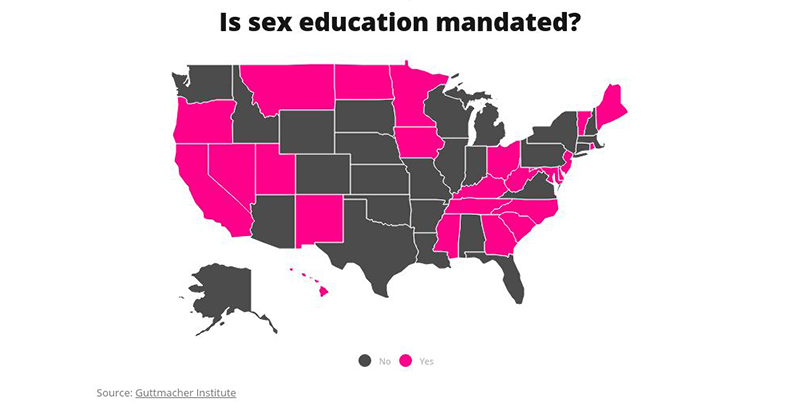
A recent study, examined by researchers at Boston University School of Public Health in collaboration with experts from Cornell Law School and Florida International University, found that although 42 states mandate sexual education in public schools, only 19 of those require that the instruction be medically accurate. Even among these 19 states, five require medically accurate information only for specific topics rather than for the entire course content. This uneven requirement points to a system in which the foundational, scientific details behind sexual health are compromised by local or state political agendas.
This mosaic of legislation reflects several tangled issues, such as:
- Different interpretations of what constitutes medically accurate content.
- Occasional reliance on outdated statistics or politically motivated guidelines.
- The allowance for parental discretion in determining whether a student is exposed to sexual education curricula.
- Variances in the depth and breadth of topics covered in courses ranging from basic reproductive health to more nuanced discussions of consent and sexual orientation.
These factors combine to create an environment where not every student is equipped with the key knowledge to make informed choices about their sexual well-being.
Challenges in Implementing Medically Accurate Instruction
One of the main stumbling blocks in creating a unified sexual health education system is the difficulty in ensuring that curricula are medically accurate and free of bias. In many jurisdictions, the intricacies of sexual health are reduced to oversimplified messages that might help avoid controversy, yet fall short in offering a comprehensive understanding. Parents, educators, and advocates have raised concerns that the struggle to decide what information is “medically accurate” is riddled with subtle parts that make it challenging to design an inclusive course.
Some of the reasons behind these complications include:
- Scientific advancements occurring faster than legislation can adjust.
- Challenges in standardizing topics such as contraceptive effectiveness and disease prevention across various cultures and communities.
- Ingrained political and religious influences that foster an environment more receptive to selective factual representation than to the complete nitty-gritty of modern medical science.
Given these factors, it becomes clear that the process of developing truly comprehensive sexual health education demands significant restructuring of current policies.
The Role of Abstinence-Only Programs in Education
Another significant aspect in this debate revolves around the persistent use of abstinence-only programs. Thirty-four states require that school-based sexual health education incorporates abstinence instruction. Despite decades of research showing that an exclusive focus on abstinence may be both intimidating and, at times, even harmful to adolescent sexual health, such approaches persist and continue to be supported at the federal level in many instances.
Critics argue that relying primarily on abstinence-only curricula—without offering complementary education about contraception, consent, or the prevention of sexually transmitted infections—leaves many students without the complete picture. Experts emphasize that while abstinence can indeed be part of a broader educational framework, it should not serve as the only method promoted in the classroom.
For many educators and health care professionals, a balanced approach is super important. When sexual education is reduced to a simple message of abstinence, students are denied the opportunity to dive in to other key aspects such as:
- The accurate and safe use of different contraceptive methods.
- An understanding of when and how to seek professional health advice.
- The ability to engage in conversations about consent and respectful relationships.
This limited scope not only undermines the development of critical life skills but also endangers the well-being of young people facing real risks in a diverse society.
Parental Consent Policies: Opt-Out Versus Opt-In Options
The reliance on parental decision-making further complicates the overall picture of sexual health education in the United States. In 34 states, the default position is to allow parents to opt their children out of receiving sexual education, meaning that unless parents actively choose otherwise, their children may be excluded from receiving critical health information. By contrast, in five states, the system requires parents to opt in for their children to participate, which can lead to even lower rates of student enrollment in vital sexual education courses.
These choices present a nerve-racking dilemma for several stakeholders, as the intention behind parental involvement is to respect community values and individual family beliefs. However, the result is often a reduction in overall coverage and a perpetuation of misinformation concerning topics such as:
- The spectrum of sexual orientation and gender identity.
- Contraception and safe sexual practices.
- The importance of understanding consent and boundaries in relationships.
It becomes clear that a structure allowing too much discretion at the parental level may inadvertently result in inequitable access to comprehensive, science-based education. Such disparities open the door to preventable health risks for adolescents, ranging from unintended pregnancies to sexually transmitted infections.
Impact on Adolescents' Health and Well-Being
The consequences of these uneven state laws extend directly to the health and well-being of adolescents. Young people across the country are disproportionately at risk for experiencing conditions related to poor sexual health, including sexually transmitted diseases and HIV/AIDS, as well as facing challenges in forming healthy, respectful relationships.
Without full exposure to medically accurate and comprehensive sexual education, adolescents are left to fend for themselves in a world where misinformation can prove dangerous. The following are some of the off-putting outcomes observed among young people influenced by fragmented health education:
- An increased rate of unintended pregnancies and associated socioeconomic impacts.
- A continued spread of sexually transmitted infections due to a lack of practical preventive measures.
- Emotional strains arising from uninformed decisions about relationship dynamics and personal boundaries.
There is a pressing need for state and local governments to reevaluate current mandates with a focus on imparting essential, accurate information that youths can rely on as they step into adulthood.
Regional Differences: Examining East, South, Midwest, and West Variations
One of the more intriguing aspects of this issue is the clear regional variability in sexual education policies. According to the study, every state in the Northeast requires school-based sexual education on at least one topic, whereas only 88 percent of Southern states, 83 percent of Midwestern states, and 62 percent of Western states have similar mandates. These regional differences not only highlight the varying cultural attitudes toward sex education but also stress the need for a more unified federal approach.
This divergence can be summarized as follows:
| Region | Percentage of States Mandating Sexual Education |
|---|---|
| Northeast | 100% |
| South | 88% |
| Midwest | 83% |
| West | 62% |
The disparities observed in these statistics bring to light the many tangled issues that arise from relying solely on state-level mandates. A student’s geographical location can determine what they learn about important subjects such as HIV prevention, child abuse alertness, or even the challenges of dating violence and intimate partner violence. These slight differences in policy result in a patchwork of educational experiences, leaving some students with comprehensive instruction while others receive only partial information.
Working Through the Legal and Political Maze: A Look at Sociopolitical Influences
Beyond the legal texts and classroom syllabi, there exist several underlying sociopolitical currents that shape sexual education policy. Policy decisions about these curricula are heavily influenced by state-level political climates, which are in turn driven by a mixture of historical, cultural, and community-specific factors. In states where vocal advocacy groups push a narrowly defined program, the resulting curriculum tends to focus on abstinence rather than offering a round-the-clock perspective on sexual health.
The political forces at work often include:
- The influence of religious organizations and conservative groups.
- Political pressures that favor programs perceived as less controversial, even if they offer only a limited scope of information.
- The tension between community values and the need for an inclusive, medically accurate curriculum that addresses today’s public health challenges.
In several instances, these forces result in policies that not only curb discussion of certain topics but also, in some states, create an environment that is loaded with issues for educators who want to provide more inclusive instruction. Even when there is scientific consensus regarding the benefits of comprehensive education, political influences can steer the conversation towards messages that resonate with a limited segment of the community at the expense of broader public health.
Benefits of Comprehensive Sexual Health Education
Advocates for comprehensive sexual health education argue that beyond the basic knowledge of biology and reproduction, students benefit from a nuanced discussion that covers social and emotional health aspects. Comprehensive programs emphasize:
- Accurate, medically supported information that students can trust.
- The importance of consent and communication skills in relationships.
- An understanding of the risks associated with various sexual behaviors, including the potential for disease transmission and emotional harm.
- The value of personal responsibility and informed decision-making in intimate relationships.
While it might seem overwhelming for policy makers to figure a path in a system already tangled with issues, these educational benefits are key to cultivating a generation that is knowledgeable, respectful, and proactive in making healthy choices. By moving away from an overemphasis on abstinence, educators may be better positioned to offer solutions that include contraception education and discussions on how to build healthy relationships.
Comprehensive versus Abstinence-Only Approaches: Assessing the Evidence
The divide between comprehensive sexual health education and abstinence-only curricula remains one of the most heated debates in the realm of public education. Critics of abstinence-only programs point out that many of the studies supporting comprehensive programs provide evidence of lowered rates of unintended pregnancies, reduced transmission of sexually transmitted infections, and improved self-esteem among adolescents. In contrast, abstinence-only programs, which are often promoted based on moral or religious grounds, have not consistently demonstrated similar outcomes.
Research indicates that:
- Students exposed solely to abstinence-based instruction may lack critical details needed to prevent disease or negotiate consent.
- Comprehensive programs that incorporate discussions on contraceptives and safe sex practices tend to be more effective overall in reducing risky behaviors.
- Students in jurisdictions with medically accurate and all-inclusive sex education are better prepared to tackle the realities of their physical and emotional development.
In a climate that is already full of problems regarding misinformation, ensuring that each student receives a balanced, well-rounded educational experience is not only essential but must be a top priority for state legislators.
Parental and Community Involvement: Finding the Right Balance
The role of parents and community stakeholders in shaping sexual health curricula cannot be overstated. While parental rights and community values are super important in a democratic society, the current opt-out and opt-in policies may sometimes result in decisions that leave students without access to comprehensive medical information.
Key considerations in this debate include:
- Respecting the diverse cultural and religious values present in local communities while ensuring that all students receive critical health education.
- Creating a balanced approach where parents are informed and involved but not given undesirable control over what is fundamentally a public health issue.
- Implementing policies that encourage dialogue between educators, health professionals, and parents to design curricula that reflect both community values and the best available scientific evidence.
It is clear that an overly restrictive policy could, for instance, leave many students missing out on learning about topics like sexual orientation, contraception, and consent—subjects that are not only medically accurate but serve as key building blocks for responsible behavior later in life.
Real-World Consequences and Considerations for Policy Makers
The ongoing debate over sexual health education is not merely theoretical. Instead, it manifests in very real consequences for the health of young people across the nation. Research indicates a disturbing gap between the intentions behind state mandates and the actual results conveyed in the classroom. As a consequence, inequality in student access to medically accurate education continues to widen.
Policy makers considering changes to these programs must address several nerve-racking challenges, including:
- Ensuring that all state curricula incorporate the fine points of medical science without resorting to outdated or biased information.
- Reconciling the need for scientific accuracy with the cultural and political sentiments that influence curriculum design.
- Developing accountability measures that allow educators, health professionals, and families to track and evaluate the effectiveness of sexual education programs.
- Striking a balance between respecting parental input and securing the essential, non-negotiable components of a comprehensive sexual health education for every student.
The adjustment process is certainly intimidating, but the long-term benefits for public health and individual well-being far outweigh the nerve-racking challenges of transitioning to an improved system.
Charting a New Path Forward: Policy Implications and Future Directions
Looking ahead, the insights gathered from the latest study underscore the critical need for policy reform at both the state and federal levels. Encouraging a unified approach to sexual health education that prioritizes medically accurate information can help ensure that all students receive the full spectrum of vital education necessary for their well-being.
Several policy recommendations emerge from the current debate:
- Establishing National Standards: Developing a set of national guidelines for sexual health education could help reduce the confusing bits caused by regional disparities while allowing for flexibility in local adaptation.
- Enhancing Curriculum Content: Ensuring education portions cover a wide array of topics—from HIV and STIs to healthy relationships and consent—can empower students to think critically about their decisions.
- Strengthening Accountability Measures: Implementing regular reviews of curricular content to guarantee that it remains medically accurate, up-to-date, and free of politicized messaging.
- Encouraging Community and Parental Dialogue: Promoting open channels of communication between educators, health professionals, and families can ease tensions and help find common ground in developing curricula that benefit all parties.
Policy makers must also face the reality that the current system is often loaded with issues that demand strategic, well-thought-out responses. It is essential to figure a path that respects community values while providing a foundation of reliable, comprehensive information that supports healthy development among young people.
Learning from Global Experiences: Comparative Approaches to Sexual Health Education
International perspectives on sexual health education offer crucial insights that U.S. policy makers can adopt as a benchmark for improvement. Many developed nations have taken steps to ensure comprehensive, inclusive, and scientifically grounded sexual education is available to all students. By comparing these approaches, the United States might glean several lessons about overcoming the tangled issues that currently plague its system.
Some of the notable aspects of global practices include:
- Mandated Comprehensive Curricula: Several European countries have nationwide mandates that ensure sexual education is both medically accurate and covers a broad range of topics, including consent, relationship dynamics, and gender identity.
- Early and Age-Appropriate Introduction: Programs in nations with successful outcomes often introduce sexual education well before adolescence in a manner that is both age-appropriate and progressively expanding in scope.
- Inclusive Education Models: Global models frequently incorporate discussions around sexual orientation, gender identity, and cultural diversity, helping to foster an environment where all students feel represented and respected.
- Integration with Public Health Campaigns: In many cases, sexual education is seamlessly integrated into broader public health initiatives, ensuring that factual, science-based information reaches a wider audience beyond the classroom.
These international experiences highlight the potential for the United States to revise its disjointed system and move toward an educational framework where every student receives the complete picture of sexual health—one that is free of the intimidating and nerve-racking pitfalls of political expediency.
Community Perspectives: Balancing Tradition and Modern Science
The debate over sexual health education also evokes strong emotional responses among communities who may be deeply rooted in traditional values. On one hand, many parents and community leaders appreciate efforts to preserve cultural identities and moral teachings. On the other hand, public health experts stress that modern scientific understanding and inclusive practices are non-negotiable in providing students with a balanced education.
To find a common ground, community perspectives can be integrated into policy making by:
- Hosting town hall meetings that bring together educators, health professionals, and local leaders to discuss curriculum reform.
- Creating advisory panels that include voices from various sectors of the community, ensuring that new policies take into account the small distinctions between cultural expectations and scientific imperatives.
- Implementing pilot programs in diverse school districts to test revised curricula before rolling them out on a larger scale, thereby minimizing the risk of overwhelming or alienating groups with strongly held traditional views.
Though these community discussions may at times be off-putting or intimidating to some educational reformers, they are a necessary part of ensuring that policy changes are well-rounded, feasible, and reflective of the society at large.
Educators on the Frontline: Challenges and Opportunities
Teachers and administrators are the ones most directly affected by state mandates on sexual health education. Faced with policies that can appear conflicting or even contradictory, educators often must figure a path through a maze of guidelines that sometimes leave little room for professional judgment or flexibility. Many teachers report feeling overwhelmed by the task of covering everything from HIV prevention to child abuse prevention under curricula that may prioritize less comprehensive approaches.
For educators, the following factors represent both challenges and opportunities:
- Professional Development: Regular training and resources dedicated to the latest scientific insights in sexual health can help teachers deliver accurate and age-appropriate instruction.
- Curriculum Adaptability: Allowing educators some leeway in adapting course content to better reflect medically accurate and inclusive information could help bypass some of the confusing bits in the current mandate.
- Creating Safe Learning Environments: Establishing classrooms as safe spaces for discussion, where students feel free to ask questions and express concerns, is super important in ensuring the success of any sexual health education program.
- Collaboration with Health Professionals: Schools that partner with local health departments or medical universities gain access to expert opinions and the latest research, which can enrich classroom content and support students’ needs.
While managing these challenges can be intimidating, it also opens the door to rethinking current approaches and embracing methods that have been validated by research and successful implementation elsewhere.
The Road Ahead: Charting a Course Toward Reform
There is no simple solution to the many twists and turns of sexual health education policy. However, the essential takeaway from recent studies is clear: a more consistent, medically accurate, and comprehensive approach is super important for the well-being of young people across the United States. Reform efforts should be aimed at harmonizing state-level mandates, ensuring that every student—regardless of geographical location—has access to the best possible information.
Policy makers, educators, and community leaders must work together to address issues such as:
- Standardizing curriculum content to include a full range of medically supported topics.
- Reducing the reliance on politically influenced abstinence-only programs.
- Ensuring that parental involvement enhances rather than diminishes the quality of education.
- Developing robust monitoring systems to regularly update curricula based on the latest scientific guidelines.
By tackling these challenges head-on, there is a real opportunity to create an environment where sexual health education not only informs but also empowers the next generation with the tools they need for a healthy and informed life.
Conclusion: A Call for Comprehensive Reform
The state of sexual health education in the United States is a vivid reminder that policy crafted at the state level can sometimes result in a patchwork of confusing bits and politically tinted messages. While most states require some form of sexual education, the persistent gaps in medically accurate and comprehensive content have left many adolescents underprepared for the challenges of their personal lives. With a system so loaded with issues, it is clear that progress will require honest dialogue, informed decision-making, and a commitment to evidence-based policy making.
As this opinion editorial has explored, every state deserves to offer a curriculum that not only touches on the basics of reproduction and disease prevention but also addresses the reality of modern relationships, consent, and personal responsibility. Reforming sexual education is not just about changing textbooks or adjusting policies—it is about ensuring that every student receives the full, accurate, and inclusive guidance they require to thrive in an ever-changing world.
Ultimately, achieving a balanced approach that respects community values while maintaining a strong foundation in modern science is key. The journey toward reform may be intimidating and filled with tricky parts, but it represents a super important move toward safeguarding the health and future of all young Americans. By taking a closer look at current shortcomings and embracing changes that prioritize evidence-based instruction, policy makers and educators can turn a nerve-racking legislative landscape into one that truly supports informed, healthy decision-making.
In light of these findings and reflections, it remains our collective responsibility—as educators, policy makers, and community members—to ensure that every student is provided with comprehensive sexual health education. Only then will we fully empower our young people to navigate the complexities of life with accurate information and confidence.
Originally Post From https://www.news-medical.net/news/20250822/Inconsistent-state-laws-undermine-sexual-education-across-the-United-States.aspx
Read more about this topic at
Inconsistent state laws undermine sexual education across ...
Only 37% of US States Require Sexual Education in ...


No comments:
Post a Comment