


Examining a Tragic Incident: Legal Perspectives and Community Reflections
The recent tragedy at Maryvale High School, where a student lost his life in a stabbing incident allegedly linked to a prior gun robbery, brings to light many tangled issues affecting not only our schools but also our legal system. As we take a closer look at the event, it becomes clear that there are several complicated pieces to untangle. This opinion editorial offers a detailed analysis of the case, the legal implications, and the effects on our communities as we try to figure a path forward through these troubling circumstances.
The case centers around a violent confrontation between two 16-year-old students that led to the untimely death of Michael Montoya II. According to court documents, his attacker, Chris Aguilar, is accused of using a 4-inch folding pocketknife—an item that somehow made its way onto the school campus—to murder his classmate. As details of the incident continue to emerge, one is left contemplating a number of critical concerns regarding school safety, weapon detection technology, and the overall handling of juvenile crimes.
Piecing Together the Timeline: Tricky Parts and Hidden Complexities
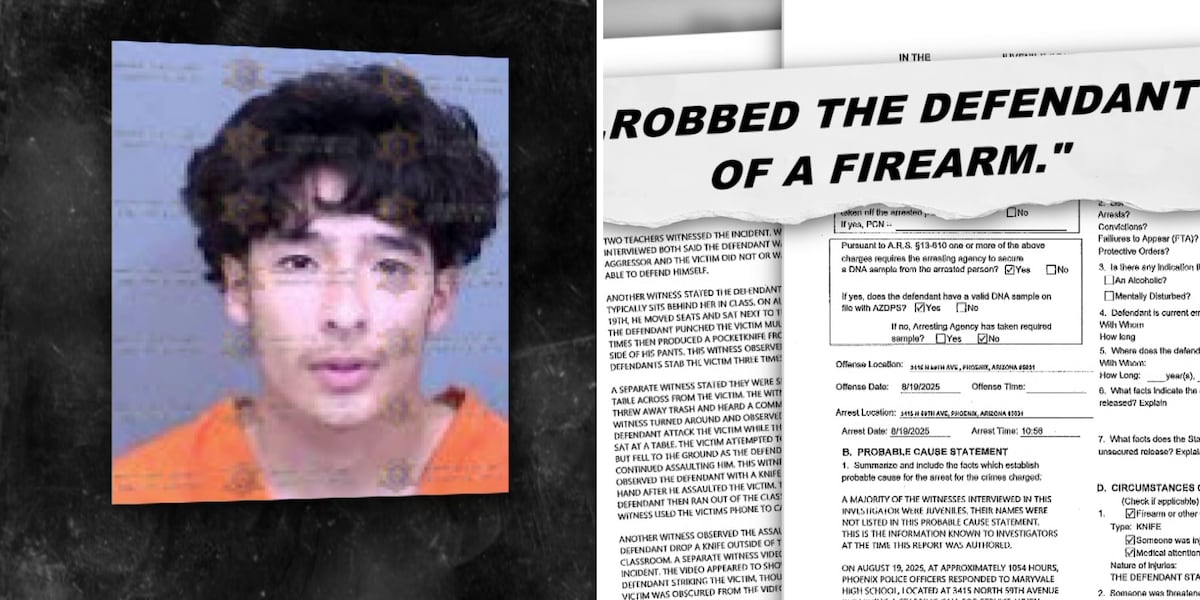
The sequence of events surrounding this incident is a classic example of how one event can lead to another, creating a web of confusing bits and subtle parts that demand a closer look. What seems to have started as a disagreement escalated with the involvement of a prior incident where Aguilar's peer, Montoya, allegedly robbed him of a firearm. Following that altercation, multiple witnesses reported that Aguilar made statements suggesting he intended to murder Montoya, setting the stage for the tragic event that unfolded on school grounds.
A Timeline of Events
The following bullet list outlines the key events as documented by officials and corroborated by eyewitnesses:
- The Day Before: Multiple sources claim that the two boys met and had a confrontation resulting in the robbery of a firearm from Aguilar by Montoya.
- The Morning of the Incident: At approximately 11 a.m., inside a classroom, Aguilar reportedly attacked Montoya with a folding pocketknife.
- Immediate Aftermath: Witnesses observed a brief but violent struggle; Aguilar allegedly punched Montoya multiple times before using his knife.
- Response: School safety officers quickly intervened after Aguilar fled the scene, retrieving the dropped knife and detaining him.
- Medical Intervention: Emergency responders rushed Montoya to St. Joseph’s Hospital, where he later succumbed to his injuries.
This timeline, though seemingly straightforward, is riddled with tension due to the conflicting accounts and the challenging bits related to the events’ prelude. It leaves us with questions: How did a pocketknife find its way onto campus, and what systems, if any, failed to prevent this tragedy?
Legal Ramifications: Assessing School Liability and Criminal Charges
The legal aftermath of this tragic event is full of problems that span from school safety protocols to the intricacies of juvenile justice. At the heart of the matter is a need to reconcile the responsibilities of educational institutions and local law enforcement when it comes to protecting students. One must consider whether the school bears any share of the blame for the failure to detect the dangerous weapon on its property and how that might influence future policies.
Understanding Criminal Charges and Juvenile Justice
In the present case, Chris Aguilar has been charged with second-degree murder, a charge that carries significant legal weight and implies severe consequences should he be found guilty. When dealing with juvenile offenders, the law often faces the tricky parts of balancing accountability with the prospect of rehabilitation. Given that both the victim and accused are minors, the legal system finds itself navigating a delicate balance between punitive measures and the recognition of youthful impulsivity.
This case raises several key legal questions:
- What precedents govern the charging of minors in violent crimes?
- How does the presence of a prior incident, such as the alleged firearm robbery, impact the severity of the charges?
- What role do first-hand accounts and witness testimonies play in shaping the narrative for jury consideration?
A Table of Legal Considerations
| Issue | Points of Consideration |
|---|---|
| Weapon Possession on Campus | School safety protocols, detection system effectiveness, accountability of school administration |
| Juvenile Criminal Responsibility | Legal precedents, age of the offender, considerations for rehabilitation vs. punishment |
| Witness Testimonies | Credibility, consistency of accounts, impact on determining the aggressor |
| Previous Confrontation | Influence of earlier robbery incident, potential motive, escalation from threat to fatal attack |
Legal experts argue that each of these issues contains its own set of little twists that can significantly influence the overall handling of the case. The procedure of assigning criminal liability, determining reasonable cause, and setting precedent for how similar cases might be dealt with in the future involves carefully weighing these elements.
Scrutiny of School Safety Protocols: Lessons and Lapses
The incident at Maryvale High School also spotlights the strategies employed by educational institutions to secure their premises. Schools today face many intimidating challenges as they work to apply advanced technologies designed to filter out potential threats—yet this event shows that even sophisticated devices can miss what they are set to detect.
Revisiting Security Measures in Schools
In recent years, many schools have joined pilot programs to test advanced weapons detectors that boast the ability to sense everything from small knives to high-caliber firearms. Maryvale High School was part of such a program, which later expanded district-wide. However, the fact that a folding pocketknife was able to slip past these detectors illustrates the hidden complexities that exist in even the most modern security systems.
School administrators and law enforcement officials are now being forced to take a hard look at the following aspects:
- The configuration and calibration of detection systems
- Training provided to security personnel on how to manage unexpected finds
- Procedures after a weapon is detected or found on campus
A table summarizing these issues might read as follows:
| Area of Concern | Considerations |
|---|---|
| Technology Calibration | Ensuring sensitivity levels, consistent updates, client-configured settings |
| Staff Training | Routine training sessions, emergency response drills, post-incident reviews |
| Communication Protocols | Clear action plans for when a threat is identified, rapid response to incidents, informing guardians |
These considerations are not merely technical problems; they have direct legal and moral implications. The failure to properly detect the weapon raises questions about liability. Could this be considered a lapse in duty on part of the school, or is it a failure of the technology that must be addressed by manufacturers and clients alike? As the investigation continues, officials are working through these issues while also trying to support a community in shock.
Advanced Weapon Detectors: A Closer Look at Technology and Its Limitations
Modern times have ushered in super important technological advancements that aim to improve security in institutions like schools. However, as this incident demonstrates, even advanced detection technology has its hidden complexities. With high expectations placed on devices like the ones tested at Maryvale High School, it is important to dig into the fine points of how these technologies work—and where they can fall short.
Understanding the Technology
Systems such as the one provided by Opengate are marketed to identify a wide range of objects, from diminutive pocketknives to large-caliber firearms. The principle behind these devices is based on scanning for specific materials and shapes that are typically associated with dangerous items. However, in configurations that are set up by individual clients—such as school districts—the attention to minor details is essential to ensure they do not miss what they are supposed to detect.
Despite the strengths of these systems, several technical and operational factors might result in detection failures:
- Configuration Settings: The detectors are only as good as the parameters set by the client. If settings are too lenient, smaller or less obvious items can go undetected.
- Maintenance: Regular maintenance and calibration checks are critical. With time, sensors can become less reliable if not kept in top condition.
- Environmental Factors: Variations in ambient conditions—temperature, humidity, and even crowd density—can sometimes affect detector performance.
Charting a Path Forward: Balancing Technology and Human Oversight
The event at Maryvale High underscores the necessity of pairing advanced security technology with well-trained human oversight. A combined approach means that while technology serves as the first line of defense, human judgment is needed to interpret and respond to detected threats. This two-pronged strategy is essential in ensuring that our schools remain safe environments—even when technology shows its limitations.
Some key strategies for enhancing security include:
- Increasing the frequency of system checks to ensure all devices work reliably.
- Regular training for security personnel to get around any technology shortcomings.
- Implementing layered security protocols where multiple methods of detection support each other.
- Establishing rapid-response teams that can intervene effectively when a weapon is detected.
The Intersection of Criminal Law and Juvenile Justice
While the school’s role in failing to detect a weapon takes center stage, the legal handling of the perpetrator’s case highlights the delicate moments that define our criminal justice system. Charging a minor with second-degree murder brings with it a host of challenging parts. In cases involving youthful offenders, the system must carefully consider both the seriousness of the act and the potential for rehabilitation.
Legal Challenges in Charging Minors
The decision to charge a 16-year-old with a severe crime such as second-degree murder is not taken lightly. The law is set up to manage these cases with both firmness and a recognition of the off-putting, sometimes overwhelming, factors related to juvenile behavior. While studies show that the brain continues to develop well into young adulthood, a crime as critical as a stabbing fatality forces courts to confront the dual imperatives of public safety and mercy for the offender.
This balancing act involves a number of small distinctions that complicate the case:
- Intent: Was the act premeditated or an impulsive reaction fueled by anger and previous conflict?
- Environment: Could external pressures and stressors prevalent in the school or community have contributed to the violent outburst?
- History: How does the earlier incident involving an alleged robbery play into determining the severity of Aguilar’s actions on the day of the tragedy?
- Rehabilitation: Given his age, what are the prospects for reform, and how might the legal system balance punitive measures with opportunities for change?
Comparing Juvenile and Adult Legal Procedures
In many jurisdictions, the legal process for minors differs significantly from that for adults. The system is designed to be more accommodating while still addressing the serious nature of violent crimes. However, the specific circumstances of this case—especially the combination of a previous violent encounter and a fatal assault—could push the judicial process toward a more rigorous treatment that mirrors adult procedures.
A brief comparison of the two approaches can be illustrated in the following table:
| Aspect | Juvenile Justice | Adult Justice |
|---|---|---|
| Sentencing | Focused on rehabilitation; sentences are often shorter and may involve diversion programs | Emphasizes punishment with longer prison terms and less flexibility for rehabilitation |
| Trial Procedures | Often carried out in specialized juvenile courts with a focus on privacy | Conducted in standard criminal courts with full public scrutiny |
| Impact on Future Opportunities | Record may be sealed or expunged to protect a minor’s future | Criminal records can have long-lasting effects on employment and civil rights |
In this context, legal professionals continue to debate whether the circumstances justify treating the event as one warranting adult-like measures or if the minor’s impressionable age should offer a measure of leniency. Ultimately, the community wants justice, and at the same time, there is a hope that the offender can eventually work through his mistakes and integrate positively into society.
Community Impact and the Struggle to Find Justice
The shock that has rippled through Maryvale High School and the larger community cannot be understated. When a student loses his life in such a violent manner, every community member is deeply affected—from parents and teachers to legal officials and policymakers. In discussions that are as nerve-racking as they are heartfelt, families and community leaders are searching for answers and a pathway to healing.
Community Reactions and Emotional Toll
One of the most overwhelming aspects of this tragedy is the palpable sense of loss experienced by those connected to the school. In the wake of the incident, vigils and community meetings have been organized for families seeking to mourn and remember the life cut short. The need for transparent investigations and a thorough review of school safety measures remains a top priority for those demanding accountability and change.
Key concerns voiced by the community include:
- Ensuring that school policies are reexamined and revised to prevent similar tragedies in the future.
- Maintaining transparency during the legal proceedings to rebuild trust among students and parents.
- Providing appropriate mental health support for the school community, including counselors and crisis intervention services.
Impact on Policy and Future Discussions
This case is not an isolated incident but rather a part of a larger national conversation regarding safety in schools. Lawmakers and school administrators find themselves at a crossroads, needing to decide whether current measures suffice or whether more stringent policies are required to manage hidden challenges on campuses.
Some policy areas that are under active discussion include:
- Enhanced Security Measures: Initiatives to further refine advanced detection systems and ensure that the human element remains central to school safety.
- Legislative Reforms: Proposals focusing on stricter consequences for weapon possession on school grounds and improved guidelines for handling juvenile offenders.
- Mental Health Resources: Increased funding and advocacy for mental health programs specifically designed to support students and staff during crises.
Local representatives have begun to draft potential legislative changes aimed at addressing these issues head-on. The goal is to create a safer educational environment while respecting the legal rights of all involved parties. Such measures, while sometimes off-putting in their scope, represent the community’s determination to prevent further tragedy.
Lessons for the Future: Rebuilding Trust and Ensuring Safety
In reflecting on this painful incident, it is imperative that the community, legal experts, and educational leaders work together on ways to ensure that similar tragedies are avoided in the future. The case has exposed several weak links in our current strategies and highlighted the necessity of finding a balanced approach to school safety, technology usage, and judicial handling of juvenile offenders.
Key Takeaways for Policy-Makers and Educators
There are several essential lessons that can be drawn from this incident:
- Reevaluation of current detection technologies is necessary. This includes both a technical audit of the devices and an analysis of how staff is trained to respond to alerts.
- Schools must invest in comprehensive safety protocols that combine technology with strong human oversight.
- Legislators should review and possibly revise guidelines that govern weapon possession on school grounds, taking into account recent failures and emerging patterns of criminal behavior.
- The criminal justice system must find a balanced way to manage cases involving minors while still upholding community safety and justice for victims and their families.
Enhancing School Preparedness
Beyond policy changes, it is crucial for schools to take proactive steps. Administrators are now faced with the task of reviewing and, if necessary, overhauling safety protocols. Key measures include:
- Routine Drills: Organizing regular, realistic safety drills to ensure that students and staff are aware of emergency procedures.
- Collaboration with Law Enforcement: Strengthening partnerships with local police and security experts to develop more effective emergency responses.
- Community Engagement: Creating forums where parents, teachers, and students can discuss concerns and propose constructive solutions.
- Data Analysis: Routinely analyzing incident reports and security breaches to identify patterns and areas needing improvement.
A proactive approach that embraces both technological innovation and the human touch is central to rebuilding the trust that has been shaken by recent events. By taking lessons from these encounters with unexpected violence, schools can hopefully steer through these challenging times and emerge with a safer, more resilient environment.
Balancing Accountability with the Prospect of Renewal
It is important to remember that while the case has unleashed a wave of legal, technological, and community challenges, it also offers an opportunity for renewal—a chance to address long-standing issues and to work toward tangible, positive change. In our pursuit for accountability, we must also consider the potential for transformation in the wake of this tragedy.
Opportunities for Systemic Change
Every major incident offers opportunities to identify gaps in our current systems and to introduce reforms that could have a lasting impact. Some critical action areas include:
- Strengthening Security Protocols: Reviewing the performance and configuration of detection systems used in schools, ensuring they are regularly updated and fine-tuned to respond to a variety of threats.
- Improving the Legal Framework: Adjusting juvenile justice protocols to mirror the complexities found in cases involving severe violent acts, while still preserving the potential for eventual rehabilitation.
- Enhancing Communication Channels: Establishing open lines of communication between law enforcement, school officials, policymakers, and the community to ensure that everyone is aware of safety measures and legal proceedings as they unfold.
- Investing in Mental Health: Allocating more resources to mental health support in schools to help students, educators, and community members cope with stress and trauma.
These initiatives are super important steps toward not only mending the damage that has been done but also establishing long-term safeguards designed to protect young lives in the future. With concerted effort and community collaboration, it is possible to transform a scenario filled with tangled issues into one that demonstrates resilience in the face of adversity.
Charting a Way Forward: Integrating Technology, Law, and Community Values
The tragic events at Maryvale High School compel us to reexamine how our society approaches the protection of its vulnerable members. There is a clear need to bridge the gaps between technology, law, and community values to create environments where safety is a right, not a privilege. The responsibility is shared: schools must ensure that adequate measures are in place, the legal system must adapt its methods to address modern challenges, and communities must remain engaged in advocating for safer spaces.
Integrative Strategies for Enhanced Safety
Moving forward, the following integrative strategies are recommended to help find your way through these challenging times:
- Cross-Disciplinary Collaboration: Schools, law enforcement agencies, legal experts, and technology providers should form joint committees to review past incidents and recommend realistic improvements.
- Community-Driven Reform: Organize regular town hall meetings that allow the public to voice their concerns and be part of the policy-making process related to school safety and legal measures.
- Regular Policy Audits: Establish independent bodies to conduct periodic audits of school security systems and the effectiveness of related protocols, ensuring transparency and accountability.
- Educational Workshops: Implement initiatives that educate students, parents, and staff about personal safety practices, awareness of potential dangers, and the correct course of action in emergencies.
Each of these strategies carries with it a promise: reducing the risks that have been revealed by this incident and building a future where tragedies like this are far less likely to occur. By combining the technological, legal, and social angles, it is possible to steer through the unexpected twists and turns and create an environment that is both secure and nurturing.
Conclusion: Healing, Accountability, and the Road Ahead
In conclusion, the tragic incident at Maryvale High School serves as a grim reminder of the multiple layers of responsibility borne by our education systems, legal frameworks, and the communities they serve. Amidst the tangled issues and challenging bits that define this case, there remains an opportunity—a chance to learn, grow, and enhance safety measures for the future.
This case has forced us to dig into difficult questions: How do we reconcile the need for advanced security technology with the limitations of those systems? How do we process the legal ramifications of a minor charged with such a severe crime while maintaining a commitment to rehabilitation and reform? And most importantly, how do we support a grieving community in the midst of overwhelming tragedy?
One fact stands unchallenged: ensuring the safety of our schools is a shared duty. It calls for a comprehensive reexamination of our security protocols, an honest assessment of our legal processes concerning juveniles, and most importantly, a concerted effort to build a supportive community framework where every voice is heard.
Although the pathway ahead is loaded with issues, and the quest for justice might seem off-putting at times, we must not lose sight of the goal: preventing future violence and protecting the vulnerable. In the end, the road to healing lies in our collective ability to learn from every mistake, make our way through the challenging parts, and fortify the systems that are designed to protect all of us.
This opinion piece is not meant to cast blame on any single entity. Rather, it is a call to action—a reminder of the intertwined roles of technology, law, and community engagement in addressing the ever-present threats that have become part of our modern reality. As we continue to sort out these issues and work toward comprehensive reform, let us remember that the true measure of our commitment lies in how we respond in the face of tragedy and how we shape the future for the next generation.
By embracing both accountability and hopeful renewal, we have the chance to turn this dark chapter into a catalyst for positive change. The legal challenges, the failures in security protocols, and the sorrow of a community in mourning must all serve as reminders that safety and justice are super important pillars of our society—one that cannot be taken for granted.
As discussions progress in courtrooms, school board meetings, and local government sessions throughout Maryvale and beyond, we are reminded that progress is often born from crisis. Only through deep reflection, transparent investigation, and a willingness to make difficult choices can we transform these nerve-racking moments into turning points for safer, more accountable institutions.
In the end, the path forward is one of collective action. It requires that we all take responsibility for implementing changes, whether by engaging in community dialogues, supporting legislative reform, or demanding better training and technologies in our schools. The stakes are high—lives depend on it—and every improvement made in response to this tragedy contributes to a future where incidents like these become a rarity rather than a recurring headline.
Let this incident serve as both a somber memorial to a lost life and a rallying point for renewed commitment to justice, safety, and community cohesion. Because when we all work together—students, educators, law enforcement, technology experts, and legislators—we can figure a path through even the most tangled and intimidating challenges, ensuring that every school becomes a sanctuary of learning and growth.
It is our duty as a community to honor the memory of Michael Montoya II by strengthening the measures that protect our children and by never losing sight of the importance of accountability and connectivity. The journey ahead might be full of twists and turns, but through shared responsibility and unwavering commitment, we can create a safer, more compassionate future for everyone.
Originally Post From https://www.azfamily.com/2025/08/21/alleged-gun-robbery-led-deadly-stabbing-student-maryvale-high-school/
Read more about this topic at
How did a knife used in deadly stabbing get on Maryvale ...
Police: Robbery led to deadly school stabbing


No comments:
Post a Comment