


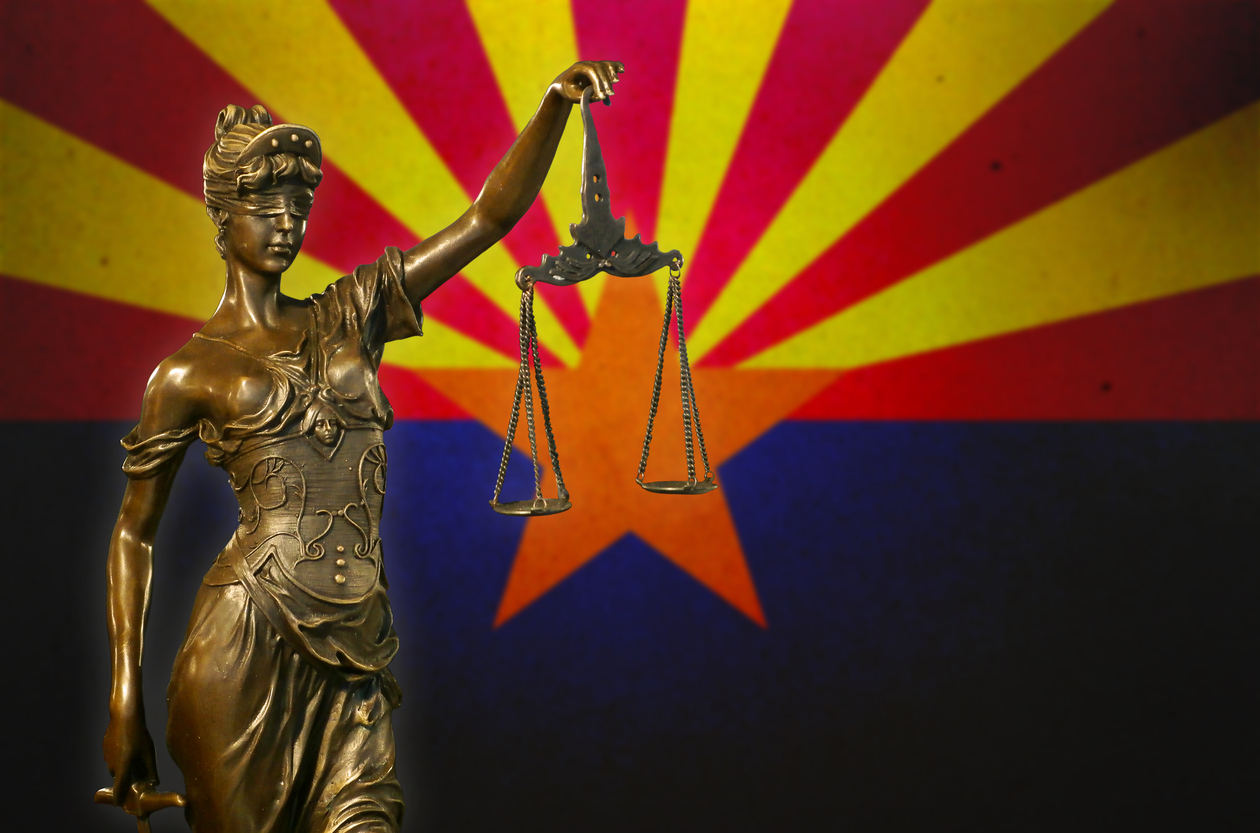
The Enduring Importance of Jury Trials in Arizona
In recent years, our legal landscape has witnessed a series of heated debates about the proper venue for adjudicating serious cases, particularly those involving allegations of fraud. At the center of the discussion is the right to a jury trial—a right that Arizona’s constitution describes as “inviolate.” This opinion piece takes a closer look at why this constitutional promise matters and how recent cases, such as EFG and Sync Title, are challenging established protocols.
The issue has come to a head in Arizona’s highest court, where two cases involving securities fraud are testing whether the state can continue to allow administrative hearings instead of full-blown jury trials. The Arizona Corporation Commission, tasked with regulating securities within the state, has been holding its own in-house hearings led by administrative law judges—hearings that sidestep the jury process that historical practice holds dear.
At its core, the discussion revolves around ensuring that the fundamental rights enshrined in our state constitution remain intact. While the modern administrative state often enjoys certain flexibilities, compromising on the right to a jury trial undermines both the historical foundations of our legal system and the trust placed in our constitutional principles.
Historical Foundations and Constitutional Promises
Arizona’s constitutional history is rich with the belief that the civil rights of its citizens should be carefully safeguarded. The state’s founders emphasized the jury trial as a crucial pillar of justice, establishing it as a safeguard against the potential abuses of power. This sentiment continues today, particularly as new legal protocols and governmental procedures evolve.
Deep Roots in a Tradition of Public Participation
Before Arizona became a state, the jury trial was a mainstay in the legal process. Even as new statutory definitions emerged—one being securities fraud—this historical principle has not lost its importance. Courts have consistently ruled that anything that would have been tried by a jury before statehood deserves the same level of legal scrutiny today. For many, this isn’t just about procedure, but about maintaining a system that is accountable to the people.
- Historical reliance on jury trials ensured that legal decisions were not solely in the hands of bureaucrats.
- The jury model fosters community participation, reflecting the voice of the populace.
- A deviation from this pathway can signal a dangerous shift in judicial control away from the public.
The key takeaway is that the historical promise of a jury trial represents more than a legal formality—it embodies public trust. When that trust is undermined by shifting to administrative hearings, citizens lose a critical voice in what should be consequential decisions regarding their rights and liberties.
Administrative Hearings Versus Traditional Court Trials
Administrative hearings can indeed be more efficient and less intimidating compared to courtroom procedures; however, they often come with tangled issues that may compromise the quality of justice delivered. One cannot help but wonder: Should efficiency come at the expense of individual rights? This question has grown particularly pressing in cases charged by the Arizona Corporation Commission.
Understanding the Key Differences
The traditional jury trial offers a platform that incorporates the full gamut of established courtroom procedures—including the rules of evidence, detailed cross-examinations, and the moral weight of a decision rendered by peers. In contrast, administrative hearings are often characterized by:
- Procedures where the normal rules governing evidence and legal procedure may be overlooked.
- Decisions made by administrative law judges rather than a neutral group of peers.
- A system that may prioritize speed and efficiency over thorough deliberation.
While the streamlined nature of these hearings might seem attractive in theory, it raises several questions about fairness and accountability. The jury trial is a time-tested method that allows for a robust exchange of arguments, ensuring that both the accused and the state are held to the highest standard of judicial rigor.
| Aspect | Jury Trial | Administrative Hearing |
|---|---|---|
| Decision Makers | Peers from the community | Appointed administrative law judges |
| Rules of Evidence | Strict adherence to established legal standards | More flexible, less formal procedures |
| Transparency | Open and public process | Often less open to public scrutiny |
This table outlines several of the key contrasts between the two systems. The jury trial’s structure fosters a deliberate process that helps prevent the accumulation of unchecked power in the hands of a few bureaucrats.
The Role of the Arizona Corporation Commission in Securities Fraud Cases
The recent debates stem from the actions of the Arizona Corporation Commission in handling securities fraud allegations against companies like EFG and Sync Title. Securities fraud, by its very nature, is defined as a crime—a matter that warrants the involvement of full criminal justice procedures, including a trial by jury. It is a tangled issue when a regulatory body opts to conduct internal hearings for cases that arguably should be decided in a public courtroom.
Examining the Stakes in Securities Fraud Cases
In these recent cases, fraud charges were brought forth by the Commission, yet instead of proceeding with traditional criminal trials, in-house administrative hearings were chosen. This move has raised concerns among legal experts who argue that:
- The special nature of fraud as a crime demands a rigorous, full-scale trial.
- The shift to administrative hearings sidesteps deep-rooted community involvement in legal verdicts.
- Such a shift sets a dangerous precedent where the government might later try to justify bypassing jury trials in other areas of criminal law.
Critics argue that even though the statute defining securities fraud might have been passed after statehood, the fundamental right to a trial by jury should still protect defendants. The argument is not about disregarding new laws but ensuring that those laws do not overshadow long-standing constitutional principles.
This debate encapsulates a broader concern: when regulatory agencies are given too much leeway to define their processes, they might unintentionally chip away at the very freedoms the constitution is meant to safeguard.
Public Rights and the Structure of Judicial Processes
Another dimension to consider is the evolving interpretation of what constitutes a “public rights” case. In many instances, courts have held that the right to a jury trial may not extend fully to cases dealing with public rights. However, the securities fraud cases bring into focus a critical point: fraud is not just another public rights issue, but a crime with significant ramifications for the individuals involved.
Reassessing the “Public Rights” Exemption
Administrators have sometimes claimed that matters such as property disputes or regulatory enforcement fall under the umbrella of "public rights," thereby justifying a deviation from the jury trial process. Yet, this approach overlooks the fine points that differentiate criminal activities from other administrative issues. Specifically, the fallacy lies in categorizing every government-led action as one that can conveniently bypass jury oversight.
In our current case, the following issues merit consideration:
- Defining securities fraud as a crime demands accountability by peers rather than by bureaucratic figures.
- The transition from traditional crime trials to administrative hearings blurs established legal boundaries.
- The historical understanding of public rights does not legally sanction the passing over of a trial by jury when traditional criminal charges are involved.
By examining these issues, we see that this is not simply a debate over procedural technicalities, but rather an effort to preserve the integrity of our constitutional framework. Allowing administrative procedures to dominate in criminal matters risks diluting the rights and protections guaranteed to citizens by law.
Restoring the Presumption of Liberty Through Jury Trials
Central to the controversy is the need to restore public trust in our legal processes by upholding jury trials. Jury trials serve as an essential counterbalance to what many see as an overzealous administrative state. Citizens have long relied on juries to ensure that judicial decisions are made with fairness, accountability, and in a public forum.
How Jury Trials Reinforce Democratic Principles
At the heart of a democracy lies the principle that every individual should have a say in the justice system. Jury trials ensure that:
- The process of deciding complex legal matters is not confined to a small group of unelected officials.
- The community plays a direct role in determining the outcome of criminal cases.
- The right to a fair trial is upheld even in the face of modern challenges posed by streamlined administrative procedures.
Ensuring that jury trials remain at the forefront of our justice system prevents the consolidation of administrative power. In essence, it is a reminder that decisions affecting individual liberties should not be made behind closed doors, without the input of a broader segment of society. Instead, they should be conducted in settings that allow for transparency, public involvement, and the full application of established legal protocols.
| Aspect of Jury Trials | Benefits |
|---|---|
| Community Involvement | Decisions reflect common values and societal norms |
| Enhanced Accountability | Outcomes are subject to public scrutiny and debate |
| Protection from Bureaucratic Overreach | Limits the power of administrative agencies by distributing decision power among peers |
This comparison underscores how jury trials provide not only a check on administrative authority, but also a powerful tool for reinforcing the constitutional promise of liberty and fairness.
Confronting Bureaucratic Overreach and Its Implications for Liberty
This debate over jury trials versus administrative hearings is more than a question of process—it reflects a broader tension between old constitutional principles and the modern administrative state. Bureaucratic overreach, if left unchecked, can erode freedoms that are essential to a vibrant democracy.
The Challenges Posed by an Expanding Administrative State
In recent decades, bureaucracies have increasingly taken on roles traditionally reserved for elected representatives and judicial bodies. This shift has led to a situation where decisions with far-reaching consequences are made by officials who are not directly accountable to the public. Some of the challenges that arise from this include:
- Decisions that prioritize efficiency over accountability.
- A perceived erosion of individual rights as procedural shortcuts sidestep longstanding legal traditions.
- A growing disconnect between governmental authority and community values.
Critics contend that the administrative state, by empowering unelected officials to enforce rules without full public oversight, introduces several intimidating twists and turns into our legal system. In response, proponents of traditional jury trials argue that only by including everyday citizens in these critical decisions can our system remain truly democratic.
Such concerns are not merely abstract; they strike at the very heart of constitutional governance. When individuals perceive that their rights are being overridden by an impersonal bureaucracy, trust in both the legal system and democratic institutions can wane. Thus, efforts by organizations like the Goldwater Institute to reassert the importance of the jury trial are seen as part of a broader battle to safeguard our constitutional freedoms.
Educational and Civic Implications of Upholding Jury Trials
Beyond the immediate legal ramifications, the contest between jury trials and administrative hearings carries important lessons for civic education and public policy. People must be aware of how these decisions shape not only the legal system, but also the everyday lives of citizens.
The Role of Civic Engagement in Legal Reform
Understanding the fine points of our legal rights is a key modicum for every citizen. In light of the recent disputes, several educational takeaways emerge:
- It is essential for citizens to be properly informed about their rights, including the right to a jury trial.
- Public participation in legal processes not only bolsters the integrity of decisions but also serves as a check on potential bureaucratic power grabs.
- Ongoing public debate can help guide judicial reform and ensure that new statutes do not override historical constitutional protections.
By engaging with these issues, communities can help steer through the confusing bits of modern legal processes. Rather than simply accepting administrative convenience, citizens must demand that the constitutional promise of a fair and impartial trial remains a living reality. This proactive engagement is one of the most effective strategies for ensuring that government decisions continue to reflect the will and values of the people.
Striking a Balance: Efficiency and Constitutional Rights
No one disputes the need for efficient procedures in our modern legal system. However, the move toward expedited administrative hearings in cases involving severe criminal allegations represents a slippery slope that may compromise constitutional rights.
Finding Your Path Through Competing Interests
The key to balancing these competing needs is to maintain strict safeguards that ensure administrative expediency does not come at the expense of fundamental liberties. Policy makers and legal experts recommend several promising approaches to achieve this balance:
- Reviewing existing statutes to ensure that all criminal allegations, even those arising from modern regulatory regimes, are given the benefit of a full trial by jury.
- Establishing oversight mechanisms to monitor administrative hearings, thus injecting an element of public accountability into these processes.
- Encouraging continuous dialogue between lawmakers, judges, and the public to find workable solutions that reconcile the need for efficiency with the preservation of constitutional rights.
Such measures can help address the overwhelming challenges that arise when efficiency and constitutional protections are at odds. Indeed, while the modern legal system must adapt to the fast-paced environment of contemporary society, it cannot do so by abandoning the tried-and-true methods that have long protected individual liberty.
A Call for Renewed Commitment to Constitutional Accountability
As we look to the future, the tension between bureaucratic efficiency and individual rights remains a central contention in American legal discourse. The recent cases in Arizona serve as a wake-up call—a reminder that the preservation of constitutional rights is not a relic of the past, but a practical necessity for ensuring a just society.
Actionable Steps for Reclaiming the Right to a Jury Trial
In summary, the way forward calls for a renewed commitment to constitutional accountability. Key strategies include:
- Legislative reforms designed to reinforce the constitutional promise of a jury trial for all cases where it is traditionally warranted.
- Judicial activism that favors traditional legal processes over administrative convenience, especially in cases involving serious allegations like securities fraud.
- Enhanced public education campaigns to ensure that every citizen understands both their rights under the constitution and the importance of active participation in the legal system.
- Stronger safeguards to prevent administrative agencies from overreaching their authority and encroaching upon freedoms that have been hard-won over generations.
These steps are more than mere policy recommendations; they symbolize a broader fight to protect the delicate balance between governmental efficiency and the preservation of liberty. In a democracy built on the premise of individual rights and community participation, any shortcut that undermines the jurors’ role in delivering justice must be reexamined with rigorous skepticism.
The Road Ahead: Building a Justice System for the People
Moving forward, the challenge will be to reconcile modern administrative needs with the enduring principles that have historically defined our approach to justice. This balancing act is not an easy one—in fact, it requires a careful examination of each decision, a willingness to get into the tangled issues of modern legal procedures, and a commitment to ensuring that every citizen's rights are preserved and upheld.
Looking at the Bigger Picture
As the debate continues, it is critical that we remember the broader implications of these issues. The shift from jury trials to administrative hearings is about more than just procedural adjustments; it is about the soul of our democracy. When decisions are made in closed-door settings by officials insulated from public oversight, citizens can feel disconnected from the mechanisms of justice that are meant to protect them.
A system that relies on jury trials, on the active participation of the people, upholds an essential promise of accountability: that no individual stands above the law, and that all are subject to the same fair and transparent process. In this context, the jury is not merely a legal construct but a bulwark against centralized power—a fundamental check that ensures governmental decisions reflect the collective will of the people.
Conclusion: Upholding the Public’s Right to Fair Justice
At a time when the administrative state continues to expand, the call to protect the constitutional right to a jury trial grows ever more critical. For many, the choice between efficiency and justice is not a binary one but a delicate balancing act that requires constant vigilance and active civic participation. By carefully examining cases like those involving securities fraud in Arizona, we are reminded that each deviation from traditional legal processes has the potential to erode hard-won freedoms.
Ultimately, the preservation of a fair, transparent, and accountable legal system depends on our collective willingness to stand by the principles that have built our democracy. The jury trial—an essential, time-honored practice—is a testament to our commitment to ensuring that every person faces their day in court not in the hands of appointed bureaucrats, but among a jury of their peers. It is a safeguard against the risks of unchecked power and a foundation upon which the legacy of our constitutional freedoms can continue to thrive.
If we are to move forward in a manner that is both efficient and profoundly respectful of our public rights, we must insist on a legal process that marries modern conveniences with the enduring values of fairness, accountability, and transparency. As the debate unfolds in courtrooms and public discourse alike, let us remember that each legal decision carries the weight of history and the promise of liberty for future generations.
In this era of rapid change, the path ahead may seem filled with intimidating twists and turns. Yet, by raising our voices in defense of a system that has long guaranteed fairness through the participation of citizens, we take a crucial step toward ensuring that our legal rights remain intact. Now is the time for all of us—lawmakers, judges, legal scholars, and everyday citizens—to figure a path that honors both progress and tradition, ensuring that the essence of democracy is never compromised.
Our journey is not without challenges or complicated pieces that demand our attention. However, with informed debate, conscientious oversight, and robust public engagement, the American legal system can continue to evolve while still standing as a protector of the rights it was designed to safeguard. The right to a jury trial remains a cornerstone of justice—a must-have element in the fight for liberty that must never be taken for granted.
In conclusion, the debate over administrative hearings versus traditional jury trials is more than a legal squabble—it is a reflection of the values at the heart of our democracy. Upholding the promise of a jury trial ensures not just a fair adjudication of the law, but also the preservation of a system that is fundamentally by and for the people. It is a call to action, urging us to safeguard our constitutional rights for today and for generations to come.
Originally Post From https://www.goldwaterinstitute.org/goldwater-urges-arizona-justices-to-protect-the-right-to-a-jury/
Read more about this topic at
Importance of Jury Service | U.S District Court
Why Americans Have a Right to Trial by Jury


No comments:
Post a Comment