


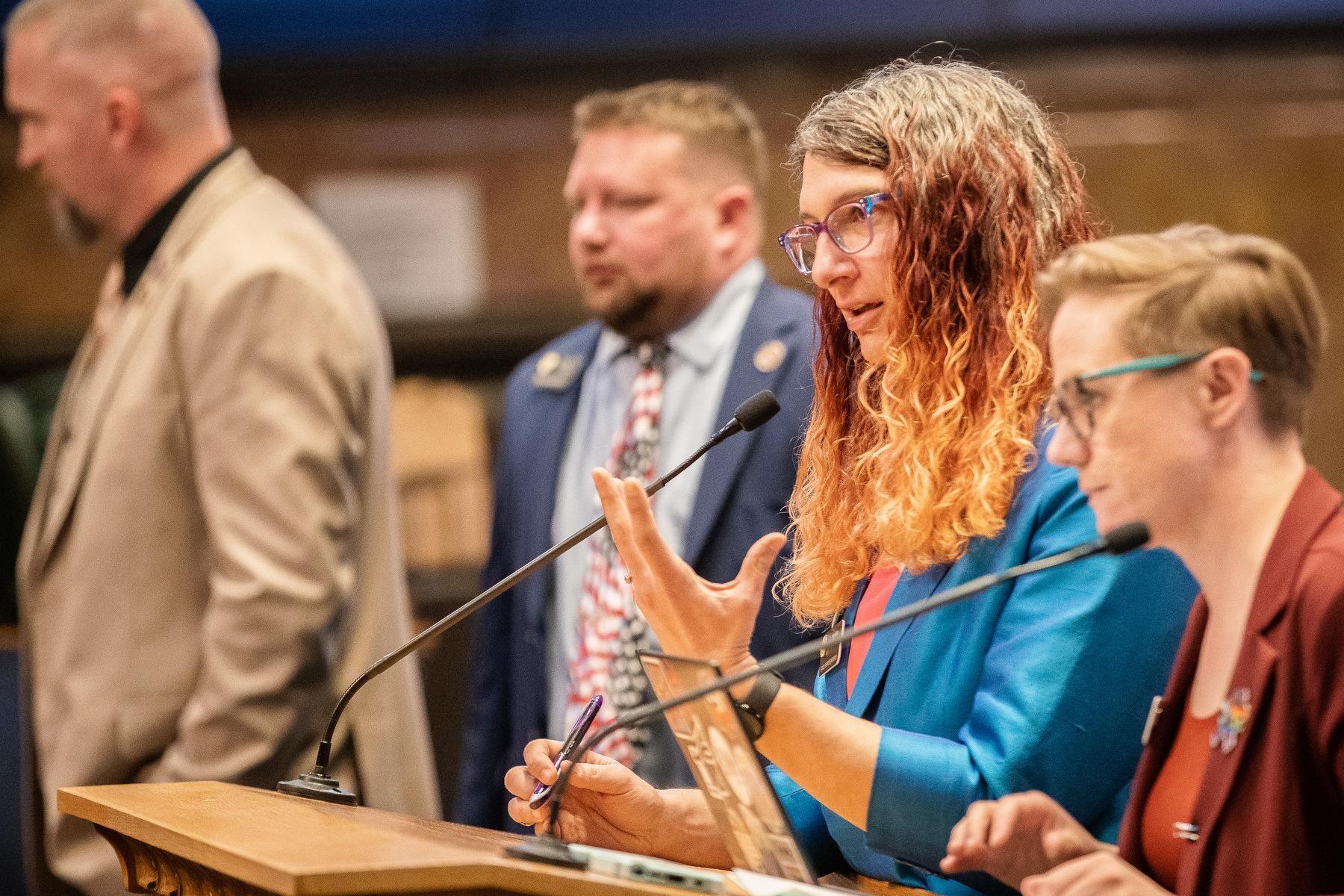
Colorado’s Special Legislative Session: Balancing a Budget Crisis and Sweeping AI Law Reforms
In recent weeks, Colorado’s lawmakers have been called to a special session under circumstances that are both pressing and full of challenges. On one hand, the state faces a $1.2 billion revenue shortfall caused by recent changes in the federal tax code. On the other, a groundbreaking artificial intelligence (AI) law—originally passed in 2024 to set anti-discrimination guardrails in key decision-making areas—is now under the microscope. As legislators prepare to tackle the budget gap, they also have the opportunity to adjust the AI law to ensure it does not stifle technological innovation while still protecting consumers.
This opinion editorial explores the legislative debate that is taking place in Colorado with a clear focus on the various proposals to revamp the state’s AI regulatory framework. We will take a closer look at the proposed bills, the challenges involved, and the delicate balance between encouraging development in AI and safeguarding consumer rights. In doing so, we will dig into the fine points of each legislative proposal, assess their potential impact, and discuss the tricky parts, tangled issues, and confusing bits that this pivotal policy debate presents.
Revenue Shortfall and the State’s Fiscal Predicament
At the heart of the special session is a revenue shortfall of $1.2 billion—a consequence of recent federal tax code adjustments. In a situation already loaded with problems, Colorado’s lawmakers are being pushed to figure a path through a maze of fiscal priorities. The budget crisis underscores how state finances can be deeply intertwined with federal actions. For many citizens, the pressing need to close the gap has created a climate of urgency that extends well beyond the technical details of AI regulation.
The intertwined nature of these challenges raises several questions: How will funding constraints affect the state’s ability to innovate and invest in emerging technologies? Will the pressure to generate additional revenue lead to compromises on policies that could potentially support both economic growth and social equity?
Some key points on this fiscal challenge include:
- Lawmakers must determine where to make cuts or how to raise additional revenue without compromising essential public services.
- The tension between immediate fiscal concerns and long-term investments in technology highlights the tricky parts of planning for the future.
- The debate itself illustrates the tangled issues that emerge when financial needs intersect with policy goals in the digital age.
Reassessing the Sweeping AI Law: Prospective Tweaks in a Time of Fiscal Tightrope
Colorado’s AI law, passed in 2024, was a first-of-its-kind effort to set anti-discrimination guardrails for businesses using AI for important decisions such as loan approvals, employment, insurance underwriting, and school admissions. While the law was groundbreaking, Governor Jared Polis himself emphasized that the policy should be refined to avoid hampering technological innovation. This early call for revisions has now come back into focus as the Legislature seeks to adjust elements of the law during the special session.
The idea behind the reform is simple: take a closer look at the law’s provisions and make adjustments that help balance consumer protection with fostering a climate that is not overly intimidating for businesses and developers. Lawmakers have a nerve-racking task ahead of them as they work through the fine details to ensure that the law is neither too strict nor too lax.
Key considerations include:
- Redefining the scope of “consequential decision” to focus solely on employment and public safety—areas that lawmakers agree are most sensitive.
- Amending the accountability rules so that bystanders and users of AI systems are held to a more balanced standard of responsibility.
- Ensuring that any adjustments made during this session adequately reflect both the risk of discrimination and the need for continuous innovation in the AI industry.
Focusing on the Fine Points for AI Developers
One of the key proposals on the table comes from Democratic lawmakers who are keen to narrow the law’s focus on developers—the companies that actually create AI technology. Their proposed bill, Senate Bill 25B-17, would delineate specific disclosure requirements intended to clarify developers’ responsibilities. Under this proposal, AI system creators would be required to inform the deployers—the companies that use AI—to be aware of potential misuses and the steps taken to mitigate such risks.
This approach is designed to place a fair emphasis on where the main accountability should lie. Instead of placing all of the risky decision-making responsibility on the deployers, the bill suggests a joint liability structure. Such a structure would mean that both the developers and those who deploy the technology are responsible for ensuring compliance with state law.
A closer examination of this proposal reveals several interesting aspects:
- Risk Mitigation Efforts: Developers would have to furnish detailed explanations of any steps taken to reduce potential misuses—a requirement that brings a layer of transparency to the AI creation process.
- Joint Liability Mechanism: The proposal introduces shared responsibility. If an AI system missteps, liability is placed on both the developing and deploying parties unless it can be clearly demonstrated that misuse occurred solely on the part of the deployer.
- Practical Disclosure Scenarios: Imagine a situation where a bank uses AI to decide on loan approvals. Under the new proposal, the bank would need to inform applicants not only that AI was involved in the decision but also provide information about the developer, system name, and potential risks. This would better equip consumers to understand where their data and decisions are coming from.
These adjustments are meant to iron out the confusing bits inherent in the original legislative proposal. They also aim to ensure that developers feel a responsibility to build robust and transparent systems, rather than shifting the entire burden onto companies that utilize these AI tools.
Guarding Consumer Rights in the Age of AI
Another significant component of the legislative revisions under consideration is how consumer protections could be expanded in the context of AI-driven decisions. A bipartisan group of lawmakers proposes House Bill 25B-13, which seeks to clarify that existing state civil rights and consumer protection laws apply to AI systems just as they do to more traditional decision-making mechanisms.
Under this proposal, several measures would be implemented to bolster consumer rights:
- Legal Accountability: The bill would empower the Colorado Attorney General with the authority to sue any developer or deployer if their use of AI infringes on the Colorado Consumer Protection Act.
- Individual Recourse: Consumers would be able to file complaints if an AI system is found to violate the state’s anti-discrimination laws.
- Transparency Requirements: Companies would be required to disclose when consumers are interacting with an AI system rather than a human being in contexts that involve consequential decisions.
This proposal represents a vital effort to ensure that consumer rights are not overshadowed by the drive for rapid technological innovation. By mandating that companies be upfront about the use of AI in significant decision-making processes—for instance, by having clear disclosures in loan or employment-related communications—the bill attempts to find a balance between technological progress and personal accountability.
In practice, a bank might need to provide the following details on its website or during an application process:
- The fact that AI is used in the credit assessment process.
- A notification of the timing and scope of AI involvement.
- Contact details for the AI system’s developer and a system identification name.
This extra level of disclosure could help consumers understand and question the factors behind decisions that have far-reaching implications in their lives. At the same time, it pushes companies to ensure that their AI-driven systems are free from intentional or unintentional discriminatory practices.
Redefining "Consequential Decisions": Narrowing the Scope of AI Oversight
Another proposal, spearheaded by Representative Ron Weinberg, seeks more focused legislative language on what constitutes a “consequential decision” under current AI regulations. His proposed bill—House Bill 25B-4—argues that only decisions related to employment and public safety should fall under the ambit of strict AI oversight. This view excludes other areas such as school enrollment, financial services, and legal services from the regulatory net.
This approach is aimed at effectively managing your way through a law that originally covered too broad a range of issues. With such a narrow focus, businesses with fewer than 250 employees or less than $5 million in annual revenue, as well as local governments in smaller towns, might be exempt. Additionally, the effective date of the law would be pushed to August 2027, giving affected parties more time to adjust and secure necessary compliance measures.
Some of the fine points of this proposal include:
- Exemptions for Small Businesses and Local Governments: By excluding small businesses and local authorities from stringent requirements, the bill could help reduce the nerve-racking administrative burden on organizations that are not equipped to handle large-scale regulatory compliance.
- Delayed Effective Date: Moving the enforcement date to August 2027 offers developers, deployers, and consumers extra time to get their systems and processes in order. This provision is especially important in protecting emerging technological companies that may not have fully figured out their compliance strategies yet.
- Narrowed Definition: By limiting the definition of “consequential decision” to core areas, the bill attempts to take a closer look at what truly matters when it comes to significant AI-driven decisions, thereby removing some of the overwhelming details from the original law.
This bill reflects a broader strategic shift, as lawmakers attempt to steer through the twists and turns of regulating AI without strangling innovation. The proposal is emblematic of efforts to find a balance between ensuring consumer safety and allowing for a dynamic, evolving technological ecosystem.
The Complete Repeal Debate: Rethinking Anti-discrimination in the Era of AI
Not all lawmakers are in favor of tweaking the existing statute. Republican Senator Mark Baisley of Woodland Park has introduced a proposal—Senate Bill 25B-12—that would completely repeal the sweeping AI law passed in 2024. Instead of merely adjusting certain provisions, this proposal suggests starting over by updating the state’s anti-discrimination laws to address modern forms of technology.
The repeal approach reflects deep-seated opinions among some legislators that the current law is too broad and may inadvertently saddle businesses with cumbersome requirements. Relying on older models of regulatory thinking to shape policy in an evolving digital landscape might risk leaving behind the subtle details of emerging issues. Advocates for repeal argue that new legislation should be designed from the ground up to capture the dynamic nature of current technology.
This proposal is on edge in several respects by emphasizing:
- A Clean Slate: Repealing the existing law would allow policymakers to start fresh, avoiding some of the tangled issues and confusing bits that have arisen since the 2024 statute was enacted.
- Modernizing Anti-discrimination Laws: Instead of having a law that specifically targets AI, the new proposal seeks to update broader anti-discrimination measures to include any technology-driven decision-making process. This, proponents say, aligns better with the pace at which tech is evolving.
- Debated Feasibility: While some see this as a straightforward fix, others worry that a complete repeal might leave a regulatory vacuum in the short term, creating an off-putting period of uncertainty for both consumers and businesses.
Comparing the Proposals: A Table of Key Legislative Bills
The current legislative session has generated at least four prominent proposals aimed at reforming Colorado’s AI law. To help sort out these proposals and the subtle details inherent in each one, the table below summarizes their main points:
| Bill Number | Sponsors | Key Provisions | Potential Impact |
|---|---|---|---|
| SB 25B-17 | Representative Brianna Titone, Senate Majority Leader Robert Rodriguez, House Assistant Majority Leader Jennifer Bacon |
|
|
| HB 25B-13 | Representative William Lindstedt, Representative Michael Carter, Senator Judy Amabile, Senator Lisa Frizell |
|
|
| HB 25B-4 | Representative Ron Weinberg |
|
|
| SB 25B-12 | Senator Mark Baisley |
|
|
Managing Your Way Through the Legislative Process
As Colorado’s legislature works through these proposals, there are many tricky parts and tangled issues they must sort out. The process is nerve-racking for many stakeholders who are trying to figure a path between fostering innovation and ensuring that technology isn’t used in a way that harms disadvantaged groups. The following points capture the essence of the current process:
- Time Constraints: With the special session anticipated to run into early next week, legislators face an intimidating timeline to debate, revise, and pass these measures.
- Political Divides: Although some efforts such as the consumer protection bill enjoy bipartisan support, other proposals—such as the complete repeal—highlight deep divisions over how best to respond to AI’s evolving role.
- Industry Impact: Both developers and deployers of AI systems are keeping a close eye on the legislative process. The decisions lawmakers make in the coming days could have lasting consequences for innovation, business risk, and consumer fairness.
In many ways, the current legislative session exemplifies a classic dilemma of governance: how to steer through the twists and turns of new technology while ensuring that fiscal responsibilities and social protections are not compromised. Legislators are being called on to work in an environment that is replete with both tangible economic pressures and abstract debates over digital ethics.
Implications for Innovation and Consumer Trust
A broader question that looms large in this debate is how to support sustained technological innovation while simultaneously protecting the consumer public. The twin challenges of a revenue shortfall and the urgent need to upgrade outdated regulatory models have forced lawmakers to consider AI regulation through a dual lens. On one side, there is the promise of rapid advances in AI technology that could drive economic growth. On the other, there is the risk that unchecked AI discrimination could exacerbate preexisting social tensions.
Some of the key points of tension include:
- Business Viability: Adjustments that are too burdensome might stifle start-ups and established companies alike, making it even harder for Colorado to attract innovative tech businesses.
- Consumer Confidence: For technology to truly benefit society, consumers need to trust that AI systems are designed and deployed responsibly. Transparent rules and clear accountability are essential for fostering that trust.
- Economic Growth vs. Legal Liability: There is a delicate balance between creating a legal environment that is safe for business experimentation and one that leaves consumers open to harm. The idea of joint liability between developers and deployers is one method proposed to manage this fine shade of responsibility.
In many respects, the discussion in Colorado symbolizes a microcosm of national debates on digital regulation. As other states and countries look for guidance on how to regulate emerging technologies, the decisions taken here could have implications that go beyond state borders. A sensible policy adjustment that preserves consumer trust while encouraging innovation could serve as a model for similar efforts across the nation.
Industry Perspectives: What Developers and Consumers Are Saying
Interviews and discussions with various stakeholders reveal a mixed reaction regarding the current proposals. AI developers have expressed a desire for a regulatory environment that is not overly intimidating—one that allows them to figure a path toward continued innovation without facing a maze of conflicting obligations. Meanwhile, consumer rights advocates stress the need for robust disclosure requirements and real accountability, so that users are aware of who is behind the technology influencing major life decisions.
Some of the recurring themes in stakeholder feedback include:
- Transparency and Accountability: There is widespread agreement that consumers should be informed when AI is used in critical decisions. This is seen not only as a way to protect individual rights but also as a mechanism for building public confidence.
- Balanced Regulation: Both developers and consumer advocates agree that a balanced approach is essential. Policies that are too stringent might slow innovation, while lax regulations may allow for abusive practices.
- Future-Proofing Legislation: With rapid technological changes coming, anyone involved in the regulatory process agrees that the law should be flexible enough to adapt. This means accounting for both the visible twists and turns of current challenges and the hidden complexities that might emerge down the line.
Ultimately, the ongoing discussions in Colorado represent a broader societal effort to ensure that as technology is embraced, it is done so in a way that is both fair and forward-looking. Stakeholders from every side are calling for a legislative approach that takes into account the fine points of modern AI systems, ensuring that the legal framework is both practical and progessive.
Walking Through the Legislative Maze: The Way Forward
As Colorado’s lawmakers continue to work through the legislative session, many of the questions they face are both practical and philosophical. How do you steer through a proposal that has both immediate fiscal implications and long-term regulatory consequences? The answer, it seems, lies in a careful balancing act. Legislators must find a middle ground—a point where restrictive policies do not hamper innovation and consumer protection measures are robust enough to maintain public trust.
Some strategies that could help manage these tricky parts and tangled issues include:
- Phased Implementation: Introducing changes gradually—such as delaying the effective date for some proposals—can give both developers and regulators time to adjust to new requirements.
- Collaborative Dialogue: Creating more channels for dialogue between industry leaders, consumer advocates, and government representatives may yield solutions that address both business needs and public concerns.
- Flexible Regulatory Frameworks: By drafting legislation that considers the inevitable twists and turns of technological development, lawmakers can ensure that the regulatory framework remains relevant in the face of rapid change.
Given the nerve-racking nature of these discussions, it is essential that lawmakers remain both pragmatic and forward-thinking. The current debates—filled with both complicated pieces and small distinctions—are not just about resolving a revenue shortfall or tweaking an AI law. They are about shaping Colorado’s future in an era defined by rapid digital evolution.
Conclusion: Weighing Innovation Against Consumer Protection
The Colorado special session enables lawmakers to confront two of the state’s most pressing dilemmas: a significant fiscal shortfall and a rapidly evolving digital landscape that demands thoughtful regulation. As they take the wheel in revising Colorado’s AI framework, legislators must strive to balance the needs of businesses, consumers, and the broader economic environment. The proposals on the table—from focusing on the responsibilities of AI developers to redefining consequential decisions and even, in some cases, repealing the entire law—reflect attempts to navigate a maze of intertwined challenges.
Ultimately, the debate is not simply about money versus technology. Rather, it is about ensuring that Colorado’s legal framework remains robust and responsive in the face of disruptive change. With the stakes so high, every adjustment, every disclosure, and every regulatory exemption carries the potential to influence not only business practices but also the social fabric of the state.
As this legislative session unfolds, stakeholders across the political spectrum and from various industries will be watching closely. The successful recalibration of Colorado’s AI regulations could well serve as a blueprint for other states grappling with similar issues, proving that even when faced with intimidating challenges and overwhelming fiscal pressures, a measured and flexible approach can guide us through even the most tangled policy debates.
In the end, the key to success will be a willingness to adapt—to work through the small distinctions, to take a closer look at every fine point, and to find your way through the many twists and turns that define both modern technology and modern governance. Only by balancing the needs of innovation with the imperative of consumer protection can Colorado truly secure a future that is both prosperous and fair for all its residents.
Originally Post From https://kiowacountypress.net/content/least-4-bills-reform-sweeping-ai-law-expected-during-colorado-special-session
Read more about this topic at
Modernizing unauthorized practice of law regulations to ...
Summary of Artificial Intelligence 2025 Legislation


No comments:
Post a Comment