


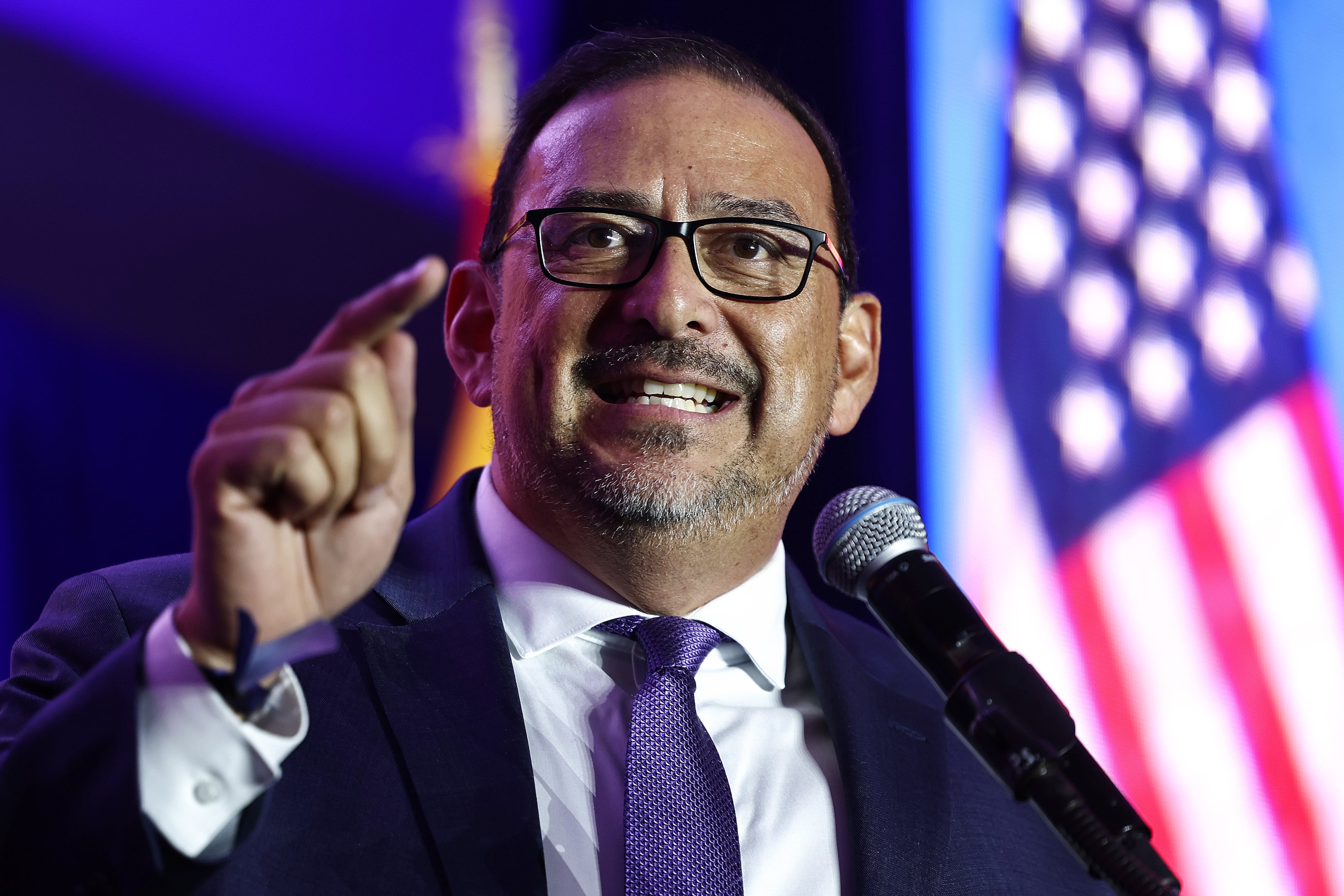
Arizona’s Election Manual Overhaul: Balancing Court Decisions and Voter Protection
In recent developments within the Arizona election landscape, Secretary of State Adrian Fontes is spearheading a controversial yet necessary revision of the state’s election rulebook. This editorial takes a closer look at the new Election Procedures Manual, recently unveiled for the 2026 midterm elections, and examines its potential implications. We will explore how the manual changes attempt to blend court decisions, address prior election mishaps, and balance competing interpretations of voter rights and election integrity.
The revised manual has sparked considerable debate. The previous edition, published in 2023, had leaned into robust protections by providing examples of illegal voter intimidation and allowing for the finalization of election results even if a specific county missed its deadline. However, after facing challenges in court and Republican lawsuits, the adjustments in the draft come in response to those judicial rulings. Fontes has removed certain examples that he initially argued would defend voter protection, and instead has retooled the language on certification procedures. This editorial digs into the reasoning behind these adjustments and the critical balance they attempt to strike.
Understanding the Ruling Adjustments and Their Implications
Critics have noted that the manual’s previous version was “loaded with issues” regarding syntax and scope. According to Fontes, some of the provisions went too far, potentially overstepping legal boundaries as interpreted by the courts. Therefore, in his effort to remain “on edge” with legal mandates, he has removed the explicit examples of illegal voter intimidation and the clause that allowed him to certify election results even if a county had not met its deadline.
This decision reflects a broader trend in election law where administrators must find their way through “tangled issues” raised by shifting judicial interpretations. The updated manual now underscores the necessity for election officials to pursue legal remedies—instead of unilateral executive action—when faced with counties that lag behind in certifying results. In other words, rather than moving ahead without waiting for a county’s finalization, election officials are now expected to seek a court order. The change signals a desire to strictly adhere to legal precedents while still aiming to safeguard the integrity of voter participation.
Insight into Court Rulings and Their Impact
The court’s role in shaping these guidelines cannot be overstated. Numerous challenges were made by Republican lawmakers, who argued that the manual’s earlier provisions overreached the secretary’s statutory authority by attempting to define what constitutes voter intimidation and by setting conditions for final election certification. In court, judges determined that Fontes had indeed overstepped, leading to a reexamination of the manual’s finer points.
The decision to remove the explicit examples of “threatening, insulting or offensive” language, particularly as it applied to voters and poll workers, is a strategic step. This move avoids potential areas of debate that could be interpreted as interfering with protected free speech, which comes under the spotlight during election day protests and other politically charged events. While Fontes commented on the challenges of preserving the balance between safeguarding voters and preserving free speech, the revised language now emphasizes adherence to established federal and state laws that define voter intimidation, without delving into subjective interpretations.
Key Takeaways from the Revised Certification Process
Another significant change in the manual revolves around the certification process for election results. The previous edition had allowed the secretary to sign off on state election results even if a particular county had failed to meet the certification deadline. The revision, however, carefully removes this blanket power, requiring election officials to instead “take all legal means” to secure compliance from outlying counties.
This new language is a pivotal development. It shines a light on the importance of upholding statutory processes and ensuring that local officials remain accountable for adhering to deadlines. While Fontes had attempted to bolster his authority after delays seen with Cochise County supervisors in the 2022 midterm elections, the revised approach leaves less room for unilateral decision-making. Instead, it emphasizes due process, seeking resolution through judicial channels and reinforcing the need for a coordinated state response to county-level delays.
For clarity, below is a summary of the main differences between the two versions of the manual:
- Voter Intimidation: The earlier manual provided specific examples of behavior deemed as intimidation. The updated version references existing laws without delving into detailed descriptions.
- Certification Procedures: Previously, Fontes could certify results despite missing county submissions. Now, he must rely on legal actions to ensure certification.
- Public Comment Period: In response to court rulings, the manual now offers a longer period for public review—30 days instead of 15—addressing concerns that the feedback window was previously too short.
Delving into the Public Comment Process and Its Broader Impact
The extension of the public comment period from 15 days to 30 days reflects the importance of transparency and public participation in shaping election rules. Extending the window allows a broader range of opinions and ideas, potentially capturing “small distinctions” in community expectations regarding voter protections and administrative procedures. This extra time could be critical given the increasingly “complicated pieces” inherent in modern election administration.
The Arizona Court of Appeals had earlier ruled that the shorter comment period was insufficient, reinforcing a trend where administrative procedures must not only comply with legal mandates but also consider public opinion. By integrating these comments, election officials hope to steer through the nerve-racking complexities that arise when multiple stakeholders—ranging from local communities to political organizations—provide input on a matter as “intimidating” as election law.
Enhancing Public Confidence in Election Administration
The expansion of the public comment period serves two main functions. First, it aligns the manual development process with legal expectations set forth by the state appellate court. Second, it provides a platform for voices that may have been previously sidelined, ensuring that both supporters and critics have the opportunity to weigh in on how local and state laws should be applied during elections.
A more inclusive approach can help mitigate misunderstandings about election law, which have often strayed into the realm of “confusing bits” and contentious political debates. A longer comment period provides a necessary period for reflection and adjustment, potentially reducing the likelihood that overlooked details result in disputes on election day.
Addressing Past Election Hiccups: Lessons from Previous Midterm Cycles
The revised manual not only responds to present legal challenges but also seeks to remedy previous election issues. Past midterm cycles—particularly the 2022 election—brought to light “tangled issues” involving ballot shortages and technical malfunctions. In light of these events, Fontes has included “best practices” aimed at equipping election officials, especially those new to the task. These practices help ensure that logistical oversights do not jeopardize voter access or cast doubt on result accuracy.
Learning from Ballot Printing Errors
One of the stark lessons from earlier elections was the shortage of preprinted ballots. For instance, Pinal County experienced a situation during the 2022 primary election where the preprinted ballots ran out, thereby complicating the process for voters. The manual now explicitly states that election officials must guarantee an adequate supply of ballots ahead of each election. This change is critical because it addresses one of the “small distinctions” that can significantly impact voter participation and trust.
Moreover, the revised guidelines extend beyond ballot quantities. They also outline expectations for properly training poll workers on the operation of electronic poll books and ballot printers. This training requirement is designed to reduce the likelihood of errors, particularly in counties such as Maricopa and Apache, which have previously experienced overwhelming technical challenges.
Enhancing Translation Services on Tribal Lands
Another important area of reform involves proposals to improve translation services for communities on tribal lands. For years, advocates have pointed out that the translations provided for ballots and voter materials often fall short of federal standards, especially on Navajo Nation territory. The updated manual reminds election officials of the federal obligation to offer necessary translations for traditionally oral languages. This measure is more than a technical correction—it is a step toward ensuring that the voting process is accessible to every eligible citizen, regardless of language barriers.
The push for better translation services highlights how seemingly minor “fine points” in election administration can have a significant impact on voter inclusion. By addressing these issues head-on, the manual not only meets legal requirements but also reinforces the state’s commitment to fair and accessible voting.
Balancing First Amendment Concerns and Election Integrity
Another pivotal discussion centers on the tension between protecting free speech and ensuring orderly election environments. Past controversial rulings have forced election officials to “get into” intricate debates on what behavior qualifies as voter intimidation. The earlier version of the manual had provided a broad characterization that extended bans on “insulting” or “offensive” language, which triggered concerns about impinging on First Amendment rights.
The current draft marks a deliberate retreat from overly broad definitions. Instead of trying to micromanage interactions around polling sites, the revised rulebook refers to existing federal and state laws that clearly outline prohibited behavior. This adjustment is crucial because it attempts to strike a balance between preserving robust free speech and preventing “tangled issues” of harassment or intimidation at polling sites.
Maintaining a Neutral Stance in Election Communication
In his public remarks, Fontes acknowledged the “crazy rulings” coming from the courts that have created a tough environment for administrators who must both protect a voter’s right to peaceably assemble and guard against behavior that might overwhelm the election process. The revised manual seeks to navigate these “small distinctions” by removing language that might be interpreted as an overreach and instead supports compliance with judicial mandates. This approach not only strengthens legal compliance but also aims to preserve the integrity of the election process while taking into account First Amendment considerations.
It is evident that both sides of the political spectrum are closely watching these changes. Republican Senate President Warren Petersen, for example, has signaled that his party will scrutinize the revised manual to determine whether it entirely aligns with the law. Such scrutiny is natural in an environment characterized by “twists and turns” in how election rules evolve over time. While Republicans are quick to champion what they term as “election integrity,” many Democrats maintain that the revised manual still offers enough safeguards to protect the voters while adhering to judicial decisions.
Comparing Past and Current Rulebooks: A Detailed Analysis
To fully appreciate the evolution of Arizona’s election manual, it is useful to compare key sections of the current manual with those of its predecessor. The table below highlights significant changes:
| Issue Area | 2013-2023 Manual Provisions | 2026 Draft Manual Changes |
|---|---|---|
| Voter Intimidation |
|
|
| Certification Procedures |
|
|
| Public Input |
|
|
| Operational “Best Practices” |
|
|
This detailed comparison underscores the systematic approach taken by the revised manual. It is evident that while certain initial measures have been removed in light of court decisions, new guidelines have been introduced to ensure that operational reliability and voter access do not suffer.
Examining the Political Dimensions of Election Rule Revisions
Arizona’s revised manual is not just an administrative document—it is entangled with political dynamics that affect how elections are perceived and conducted across the state. With political leaders from both major parties scrutinizing the changes, the manual becomes a battleground where two divergent legal philosophies clash.
On one side, supporters of the revisions argue that the updated language adheres strictly to established law and promises a transparent, fair process that avoids overreach. On the other side, critics claim that such adjustments may leave loopholes that undermine efforts to protect the voting process from disruptive behavior. The reality is that election law, by its nature, involves a series of “complicated pieces” that require constant adjustment to account for new challenges and shifting judicial interpretations.
Republican Concerns and Calls for Legislative Oversight
Republican lawmakers have voiced strong concerns that any attempt to “stretch” election law through bureaucratic means should be met with rigorous legislative review. Senate President Warren Petersen has been vocal, suggesting that if the revised rules pass muster with all legal standards, then his side can claim a win for “election integrity.” This sort of tension is hardly novel in American politics, where election law consistently finds itself at the heart of partisan debates.
Republican critiques focus on several key aspects:
- They worry that vague language regarding voter intimidation might open the door to abuses on both sides of the political spectrum.
- There is concern that the revised certification process may lead to delays if counties dispute the necessity for court orders.
- They argue that extending the public comment period, while transparent, might also provide more time for political maneuvering.
These critiques underscore the need for continuous, balanced oversight. While the revised manual seeks to follow court orders faithfully, its long-term effectiveness may ultimately rest on the ability of state legislators and local officials to work together in a partisan yet respectful manner. It remains to be seen whether these changes will discourage legal challenges or simply shift the battleground to other procedural issues.
Democrat Perspectives on Upholding Voter Access
From a Democratic viewpoint, the revised manual represents an important step forward in aligning administrative processes with both judicial rulings and the practical realities witnessed in previous election cycles. Fontes’ modifications—such as better-defined best practices and an extended opportunity for public feedback—are seen by many as crucial measures.
Democrats argue that:
- The changes are “critical” for ensuring that voters have a consistent, reliable experience at the polls.
- By strictly adhering to judicial mandates, the Secretary of State’s office protects the legal process while also keeping open the door for public input.
- Maintaining a focus on operational details, such as the proper distribution of ballots and equipment training, is a must-have approach to avoid past pitfalls.
Both parties appear to be framing the manual’s revision within their broader ideological stances: Republicans as advocates for unwavering adherence to a traditional interpretation of election integrity, and Democrats as champions of adapting to the “nervous” feedback loops of modern election administration.
Evaluating the Secretary of State’s Role in Election Modernization
At its core, the entire exercise of rewriting the election manual is driven by the need to balance the delicate interplay of statutory interpretation, judicial mandate, and modern practical challenges. As the chief election official, Secretary Fontes stands at the crossroads of these issues. His role has required him to carefully blend what is legally prescribed with what is practically necessary to avoid the “nerve-racking” complications that have marred previous elections.
Fontes’ statement about “figuring a path between the crazy rulings of courts and the need to protect peaceful assembly” may be interpreted as an attempt to find a middle ground in an environment that is, at times, highly charged politically. His focus on a rulebook that not only respects legal boundaries but also the “little twists” of operational practice reflects a thoughtful strategy. Importantly, it suggests that the aim is not to politicize the administration of elections but rather to create a system that can stand up to legal scrutiny while also being sensitive to the realities on the ground.
Practical Benefits for Election Officials
The manual’s introduction of “best practices” and clear guidelines for maintaining election equipment and voter materials could be seen as an effort to reduce the rate of technical errors. For counties that have experienced overwhelming challenges – from running out of ballots to misfiring tech on Election Day – these changes offer a roadmap to avoiding repeated mistakes.
These improvements serve not only as a reactive measure but also as a forward-looking strategy. They are designed to ensure that election officials, including new staff learning the ropes, do not inadvertently commit errors that could disenfranchise voters or lead to prolonged litigation. In a system where every “small distinction” can impact the overall perception of election reliability, these changes are both timely and necessary.
Building Trust in the Electoral Process through Transparency
Transparency in election administration remains one of the most critical elements for public trust in democratic institutions. In extending the public input period, the revised manual speaks directly to this need. An extended review window not only satisfies legal technicalities but also sends a message that the state values active participation by its citizens in shaping laws that directly affect their voting rights.
Moreover, by openly addressing past difficulties—such as equipment failures and ballot shortages—the revised manual encourages a culture of continuous improvement. Rather than burying past mistakes, it acknowledges them and proposes clear measures for remediation. This approach can help bridge the gap between a sometimes “intimidating” bureaucratic process and the practical realities faced by voters at the polling stations.
Key Advantages of Increased Transparency
Some of the advantages of this extended transparency process include:
- Improved Voter Confidence: With more opportunities to provide feedback, voters can see that their voices matter when it comes to shaping electoral procedures.
- Enhanced Operational Efficiency: Public feedback can reveal previously overlooked “confusing bits” of the system, allowing lawmakers to refine processes further.
- Stronger Legal Compliance: By aligning manual revisions with court rulings, the state reinforces its commitment to legal norms, reducing the chance of future litigation.
Ultimately, increased transparency may also serve as a buffer against politically motivated legal challenges. When all stakeholders recognize that the rules were developed through a deliberate, open process, it becomes harder to cast these rules as unilateral efforts to swing election outcomes.
Looking Ahead: The Future of Arizona’s Election Administration
As Arizona’s election manual enters its next phase of implementation, several questions remain about its long-term impact on the electoral process. There is cautious optimism that this revision will result in fewer operational hiccups and a clearer framework for addressing legal disputes. However, concerns persist around whether the new procedures will adequately prevent voter intimidation and ensure that counties adhere to statutory deadlines.
In the coming months—and indeed into the 2026 midterm elections—we can expect robust debates surrounding the manual’s provisions. Public comments, legislative reviews, and potential further court challenges will likely shape how the rules evolve, marking this period as one of significant transformation in the realm of electoral administration.
Anticipated Developments and Their Challenges
Looking to the future, election officials and legal experts alike will need to manage several “twists and turns” as they implement the revised manual:
- Judicial Oversight: Ongoing and future lawsuits may further refine or modify certain provisions, particularly around voter intimidation and certification procedures.
- Legislative Input: With Republican lawmakers already voicing strong opinions, expect increased legislative oversight and potential amendments to refine the rulebook.
- Operational Implementation: County-level officials will need to quickly adapt to the new “best practices,” ensuring that the improved guidelines translate into fewer technical failures during elections.
- Voter Accessibility: Continuing to integrate measures to support non-English speakers and communities on tribal lands will be essential in creating an inclusive voting environment.
While these hurdles are indeed challenging, they underscore the ongoing need to balance rigid legal mandates with flexible, practical solutions that support daily election operations. The revised manual aims to be a living document—one that evolves in response to both legislative action and the practical realities of administering elections in a diverse state.
Conclusion: A Measured Path Forward
Arizona’s revised Election Procedures Manual is emblematic of the broader struggles inherent in election law today—a constant balancing act between adhering to strict legal frameworks and meeting the “complicated pieces” of modern voting realities. By eliminating provisions that have been successfully challenged in court and embracing a more cautious approach toward voter intimidation and certification processes, Secretary of State Adrian Fontes has taken a measured step forward.
While the changes have not quelled all political concerns, they represent an earnest attempt to reconcile the state’s legal obligations with operational best practices. In an environment that is repeatedly described as “nerve-racking” due to its legal and bureaucratic twists and turns, the revised manual offers a more transparent, participatory, and legally compliant pathway.
As stakeholders continue to voice their opinions, and as the courts and legislature weigh in further, Arizona’s election administration will likely serve as a bellwether for the evolving dynamics of voter protection and election integrity. For election officials and voters alike, the hope is that this redesigned framework strikes the right balance—one that protects essential voting rights, respects the rule of law, and ensures administrative reliability across the board.
The coming months will be critical for evaluating whether these changes can resolve some of the “confusing bits” and “tangled issues” that have plagued past elections. With legal scrutiny and a renewed emphasis on public engagement, all eyes are now on how Arizona manages its path through these delicate matters, setting an example for other states grappling with similar challenges.
Ultimately, the revised manual reminds us that the evolution of election law is far from static. It is an ongoing process, one that depends on open dialogue between government officials, the judiciary, the legislature, and the public. By actively seeking feedback and adapting to lessons learned from past elections, Arizona is positioning itself to better handle the future’s “small twists” and unexpected challenges. Whether this approach will earn universal acclaim or new rounds of legal challenge remains to be seen; however, it is clear that the work to improve voter accessibility and election integrity is as essential as ever.
In the final analysis, maintaining the balance between protecting free speech, ensuring operational efficiency, and upholding legal mandates will require continuous adjustment and collaboration. Arizona’s evolving rulebook is a testament to the state’s willingness to adapt, learn from previous missteps, and aim for a transparent, fair, and effective electoral process.
As we watch this transformation unfold, it is important for all stakeholders to continue engaging in constructive dialogue. After all, our democracy thrives when those responsible for its administration remain open to feedback, ready to tackle challenging legal twists and turns, and ever mindful of the need to protect every voter’s right to participate freely and without intimidation.
The journey ahead may be “intimidating” and laden with political and legal hurdles, but the commitment to refining the core processes of election administration is a “key” factor in ensuring that every vote counts. It is our hope that these measured revisions will pave the way for an electoral system that not only meets today’s legal standards but also sets a strong foundation for the future of American democracy.
Originally Post From https://www.votebeat.org/arizona/2025/08/04/secretary-of-state-adrian-fontes-election-procedure-manual-2026/
Read more about this topic at
Arizona's secretary of state changes election manual in ...
Arizona GOP, governor clash over election law overhaul ...


No comments:
Post a Comment